Showing posts with label transport. Show all posts

Wednesday, 7 April 2010

Coffee at the Grand

Every so often, I like a taste of luxury. It was years since I'd last hidden in the Grand Hotel but I wanted a morning away from the office. Sometimes that's the only way to get things done. At the same time, I needed to keep in touch. The Grand wasn't far off my route. I checked the sign in the window: "free wi-fi." It would do.

Coffee at the Grand is good but expensive, even by the standards of frothy coffee bars. I usually make my own coffee or head for a small, independently-run coffee bar. There's an Italian coffee stall in Nottingham's Victoria Centre market which may just offer the best coffee in the East Midlands - and I can practise my Italian too. But I can't linger too long in an independent coffee shop - I know the manager needs my table and the profits from a continuous line of customers. The Grand Hotel is big and wealthy enough not to disturb me. It also has the benefits of comfortable sofas and piped music that is quiet enough not to disturb. The loos are luxurious too. And the woman who brings my cafetiere is quietly welcoming.

I used to be afraid of grand hotels. I thought they were meant only for the rich, that they had strange dress-codes and obscure rituals I wouldn't understand. I thought the well-dressed porters and waitresses would laugh, refuse to serve me and throw me out. Luckily, in my late teens, I encountered fellow teenagers who thought nothing of ordering coffee in a posh hotel - and it would have been more embarrassing to confess my fears than to join them.

I wouldn't want coffee at the Grand to be a regular experience. I like my luxuries to seem special. Perhaps I've already been too over-indulgent lately. As well as coffee in the Grand, I experienced another quiet luxury - first class rail travel.

I was booking on-line for a journey to see my parents. I was fairly flexible about times and looking for the best deal - a complex process that probably merits a higher-level GCSE. Then I saw that the cheapest single price on one train - the best deal going! - was the same for first or standard class. I booked it at once and then found a first class ticket back at only £5 more than the cheapest journey. It seemed worthwhile - even with a seat booked in advance, I've found myself standing for part of the journey lately and first class would surely guarantee a seat.

I was startled by the quiet spaciousness of first class travel. I think the thick carpets help. On the way back the carriage was full so there were the usual interruptions of mobile phone-calls and eager children. Neither were more interesting than fellow travellers in standard class and I didn't manage any more work or reading than usual. Instead I spent my time marvelling at the way the carriage seemed to soak up the sound and wondering whether the views were just slightly different from first class carriage windows. I didn't reach a conclusion. I was simply grateful for the quiet and the chance to rest my back. I think I could have gone to the buffet and collected a free coffee too, just by showing my ticket. But I fear that railway coffee doesn't reach the high standards achieved by the Grand Hotel. I did without.

Friday, 11 December 2009

Voilà Jean


It seems as though I've always known the story. Before I first read Victor Hugo's story in my early teens, there was a classic comic - then a BBC Sunday evening serial. Perhaps my mother told me the tale - it was certainly one of her favourites. Cosette, Marius, Fantine, the Thenardiers and, above all, Javert and Jean Valjean weren't just characters in a book - they were part of the mythic structure by which I understood the world.

These days, fewer people read Les Misérables. "It's too long," someone told me last night." "I was put off by the musical," another commented. "I've read The Hunchback of Notre Dame," was another defence, as if one Hugo novel could stand for all the rest. Mind you, I haven't read much by Hugo. I'd like to find time for the late novels L'Homme qui Rit (The Man who Laughs) and Quatre-vingt Treize (1793). But before I do that, I have to finish Les Misérables and I'm still only 260 pages in. There are about 1200 to go so I'll be busy reading over Christmas.

Last time I tried to re-read Les Misérables, I picked up my old English-language version. It's a bulky tome from Collins, with mock-leather binding and pages as thin as any Bible's. I thought it the height of elegance when I was 13. A few years ago, I found the prose style dull and was bored by Hugo's sententious moralising. I put it down again.

This summer, in one of the French bookshops at South Kensington, I picked it up again - perhaps in an abridged edition - and the magic returned. I hesitated, thought I might buy a copy, then left the shop. I was having a small economy drive and wasn't convinced I'd get through more than a chapter. Besides, the exchange rate means that French books are no longer as cheap as they were. I thought I'd get over it. But throughout the autumn I found myself looking for copies in English bookshops and secondhand shops, checking the prices on-line and wondering if perhaps, for Christmas, for my birthday, I should buy myself a copy.

I didn't expect to find the three-volume paperback edition in the Canterbury Oxfam shop. I checked carefully to ensure it was a complete text, looked at the price (£4.99) and reflected that, even if I didn't read it, Oxfam could do with my money. Most of my long journey home was consumed with work but on the tube, on the bus, when waiting at stations, I started to read ... and I found it hard to stop. Even now I don't want to blog about Les Misérables - I want to read it, and I'm tired from reading it last night when I should have been catching up on sleep.

The first eighty or so pages dragged slightly - they focus on the good bishop who changes Jean Valjean's life. Maybe I needed to read myself into the book or just to get used to Hugo in French. Once Jean Valjean arrived, I found myself at risk of missing my stop on the bus. I've even walked along the road while reading - something I haven't done for at least forty years.

Perhaps it's the focus on the poor that commands my attention. I may respect the bishop but I care about Valjean, Fantine and the other "misérables" of the book's title. Reading in French makes me consider what "misérable" means. It's not "unhappy." I've seen the word translated as "wretched." But surely in France where Catholicism and the Latin Mass were so important, there's a connection to the Latin prayer "miserere nobis" - "have mercy upon us." Many of the people in Les Misérables are wretched and unhappy but, above all, they need and deserve mercy.

Hugo's conviction that mercy is a greater human responsibility than truth, justice or any other accepted virtue is startling in today's society. Mercy isn't restricted to the cute or angelic. When Jean Valjean first appears he is compared to a brute and an animal. His grievances about his treatment in jail have placed him outside human society. He's never been a great part of it. He doesn't even have a proper name. Hugo explains that he's inherited the name "Valjean" or "Vlajean" from his father and that it was simply a corruption of "Voilà Jean" - "There's Jean." He's an individual who has been despised all his life and who has learnt to hate in return.

In Les Misérables, Hugo insists that human beings can learn and change - that mercy transforms lives and communities. He was writing against the trend in his own time. Les Misérables was published in 1862, five years before Zola's
Thérese Raquin, the first of a string of major novels which proclaimed the belief that humans were controlled by the circumstances of their lives and had no means of escape or power over the events that affected them. I may care about Zola's characters but his view of the world doesn't fit the people I encounter.

The world I live in includes people who are cruel and vindictive like the Thenardiers. I've met plenty of people like Javert who obey laws and rules unthinkingly because they assume the forces of law government always know best - people who assume that the wealth and its trappings are a badge of virtue and respectability. But there are also many people like Jean Valjean and Fantine and even the Bishop - trying to do their best, making mistakes, giving way anger and misjudgement but also capable of enormous love and generosity. These are the flawed, good people who are willing to learn and change. They show mercy to others, even at great cost, because they also need and receive mercy.

It's not a very modern view of the world but I'm rushing back to it. I should be in bed asleep but Jean Valjean is on his way to Arras and I want to know - even though I know already - what happens next.

Saturday, 7 November 2009

Station approaches


I'm never quite sure if I like Derby. Of the triangle of East Midlands cities, it's the one I know least. I'm more often there to change trains than to visit. But on impulse I decided to catch the train. There was a film I wanted to see at the Quad - the recent French film, The Army of Crime - and, after five weeks of overwork combined with a succession of viruses, it seemed splendid to be heading out for a treat on a Friday afternoon.

I found to my delight that I was once more able to run for the train - it was a very last-minute decision - and, once on the train, reflected that my life was suddenly becoming quite self-indulgent. I'd been to a bonfire, firework and pizza party the night before and now I was off to the cinema. By the time I arrived in Derby, I'd decided I liked the city. Perhaps I could even move there, one day. I considered the advantages: good train services, easier access to the Peak District, the Joseph Wright paintings in the museum, the Victorian market hall. Above all, it would be a new place and I would feel as though I were starting life again. I started to think about small, manageable houses without gardens and in good repair. I tried not to think about the horror of moving or getting a house in sufficiently good order to be shown to buyers.

I can never remember the quickest way from Derby station to the city centre. I took a slightly complicated route, past small modern factories and the huge Westfield shopping centre. It all seemed slightly dull in the November drizzle but I reminded myself that this was my afternoon out and determined to enjoy myself.

I'd never been in the Quad before and this wasn't a good start. I'd just got my money out when I saw the sign "An Army of Crime - cancelled, replaced by Casablanca." I asked what had happened but didn't exactly follow the answer: something about the equipment failing to "ingest" the film. "Is it digital?" I asked, in an attempt to understand. I didn't understand at all. Apparently digital films have to be ingested at least two hours before the screening. However a new copy was on its way. I bought a ticket, with cash, for the early evening screening and headed out in the rain to explore Derby.

I must have spent two and a half hours wandering, mainly gazing in shop windows in the hope that I'd feel inspired about birthday and Christmas presents. Then I thought I'd return to check that the replacement copy of the film had arrived and was being ingested safely.

The courier, due at two, hadn't arrived and it was nearly four. I decided to wait in the faint hope that the film would arrive and sat in the foyer, leafing through the film programme. The woman running the box office was suddenly concerned about my wasted afternoon and offered me a complimentary drink from the bar. I asked for a pot of chai so I was at least warmer when the news came that the film had been cancelled. The box office woman gave me my money back and offered me a complimentary ticket for any film in November. I accepted, though I'm not sure I'll make it to Derby again. But the kindness began to make up for my disappointment. I finished my tea and headed along the damp, dreary route past the overhang of the Westfield centre and bleak garages toward the railway station.

This time I managed the quick route and noticed the attractive railwaymen's cottages close the station. There were a couple of promising pubs too and an excellent chip shop. I began to fantasise about moving into one of the railwaymen's cottages. I thought I'd like being near the station. I always enjoy the possibility of easy escape. And I liked the idea of living in a railwayman's cottage. My dad was a railwayman - he worked as a fitter on the London Underground for 39 years and still takes an interest in trains.

I was unexpectedly tired when I reached home. I should have picked up some work but felt unable. I went to bed with a couple of books and decided I'd have a lie in on Saturday. But in the morning I felt the after-effects of the Derby drizzle. I had a bad cold and was aching too much to go anywhere. I coughed, spluttered and slept.

I have stopped dreaming of a move to Derby.

Saturday, 5 September 2009

Loving Paris


Arriving at the Gare du Nord, I was equipped with the carnet ticket that would take me to Montreuil. I like to keep fresh carnet tickets in my purse, telling myself that I have the tickets ready and therefore I must be back in Paris soon. I keep old tickets and use them as bookmarks so that every so often, when I pause in my reading, I'm reminded of journeys in the city I love.

This time I was over-confident. I didn't read the sign telling travellers to push their cases ahead of them. Instead I walked through the automatic gates pulling my suitcase behind me. They closed sharply and my case was trapped.

I was, of course, embarrassed. But a fellow-traveller, seeing my hopeless efforts to tug my case free, came to assist and quickly solved the problem. "You need a navigo," she told me (in French) and started asking other travellers whether they could help me by loaning one. Within a couple of minutes a young man realised what would work and laid his navigo on the panel that would recognize him as a legal traveller. The gates sprang open to admit him, the woman pushed my case through and went on when I'd hardly finishe stuttering my thanks.

It's hard to manage on the metro with a heavy case. The lines must have been built separately so the connections between them involve long tunnels, steep staircases and only occasional escalators or lifts. Sometimes I struggled alone but quite often people came to my help - smartly-dressed young people insisted on helping and so did one of the vendors of cheap toys and fluorescent Eiffel towers who left his pitch in the tunnel to run up a flight of stairs and help with my case.

Even with the help, my feet ached from the journey. Somehow they acquired small cuts and blisters which made walking difficult for the first part of the week. Perhaps the pain in my feet combined with my distaste for Versailles to make me less sympathetic than usual to the momuments to the French Republic.

I can't love the Panthéon. It's fine from the outside and when I stook in rue Soufflot under a dark grey sky with thunder crashing and lightning streaking across the sky the building came into its own. But the vast interior with its huge sculptural representation of the Convention doesn't grip me as much as the colourful Gothic delights of the much smaller Sainte Chapelle. Nor do I enjoy the collection of great men in the crypt (one woman is honoured there - Marie Curie was added in 1995). There are aspects to enjoy. I was amused by notices explaining how several people initially honoured at the Panthéon had later been demoted and buried elsewhere - even in death, it seems, the great men and their supporters were jostling for distinction. But it was good to see a memorial to Toussaint l'Ouverture and I could remember watching part of the ceremony in which the elder Alexandre Dumas was finally moved there in 2002. But it's part of the assertion of national greatness on a monumental scale which fails to touch me. In the same way, when I look at the Arc du Triomphe, so vast on its traffic island that it diminishes its visitors into insignificance, I feel regret rather than admiration.

Among all this neo-classical monumentalism, the Eiffel Tower is striking because it's so plainly linked to a people's Paris. It's a work of craft as well as art - whenever I see it I think of the skill with which it was designed and the hard work which created it. I've been to the top of the Eiffel Tower only once, when my son urged me to conquer my fear of heights. (That fear left me a year or so later but I faced my fear and got to the top - I still have the ticket to remind me.) But there's nothing intimidating about the Tower - it doesn't celebrate great men or the power of kings or state but human achievement in a city.

My favourite places aren't the great Haussmann boulevards, so convenient for crowds or armies and tanks. I like the small streets like the rue Mouffetard where people wander and work and shop and worry. I like places where the workers of Paris sit and talk at café tables the moment there's the faintest gleam of sun. I enjoy the everyday life of the city which can be rough as any city but which also has space for casual kindness. I'll remember all the sightseeing from my visit - and there's much I haven't mentioned here. But I'll also remember a comfortable basement cinema where the staff made viewers welcome, a hospitable African shop in Montreuil which serves - for 1 euro - the best espresso I've experienced in Paris, and a friendly Belgian pub near the Panthéon where happy hour starts at 4.00 p.m. so that draught Leffe arrives in double quantities.

Tuesday, 1 September 2009

Bare feet and unknown princesses


I was doing Paris on the cheap - and on my own. None of my friends were there but Anna offered the loan of her house in Montreuil. I needed to decide how to manage my holiday and make my money last.

Obviously, being alone, I wouldn't need to eat out. A regular morning coffee and the occasional pression - Leffe, by preference - would be bound to keep me going. And in Paris you can almost always find a boulangerie when you need one. I could have a good breakfast in the mornings and make myself an excellent salad with wine when I returned home.

I decided the time had come for the kind of tourism I'd been putting off for years. A web investigation told me a 6-day museum pass would be a good investment if I was serious about sightseeing. It costs 64 euros but many of the places I wanted to visit cost between 8 and 10 euros, and I reckoned I'd probably visit two or three in a day. It has the additional advantage of letting the holder bypass the long queues for tickets.

The metro was easy too. Thanks to Gerard, I already had a navigo (the French equivalent to the London oyster card) and had been educated in how the pricing systems work. I checked the zone map on the internet. Versailles was in zone 4 so it would be sensible to go on Sunday, using a 4-zone mobilis which allows flexible travel for the day. Then I would load a 2-zone weekly carte orange on my navigo from Monday. The carte orange, which is now virtual and therefore no longer orange, always starts on a Monday. It's a bargain for anyone staying for most of a calendar week. For just over 17 euros I could travel by bus, metro, the regional RER trains (some of them double-deckers) and even a little ferry on the Seine - the voguéo. While my museum pass made me feel like a tourist, the navigo let me think of myself as a true Parisienne.

But it was hard to settle into sightseeing after the oppressive grandeur and gilding of Versailles. I thought I'd better follow the Marie Antoinette trail to the Conciergerie, where her former cell is now equipped with a TV. There were expiatory mouments too. Louis XVIII was keen that the French people and the Parisiens in particular should repent of executing a monarch and his consort. I had more sympathy for the victims of the Terror of whom nothing was known but their name. All those guilloutined - more than 2,000 of them, which was fewer than I'd thought - were listed; the Terror was conducted along carefully bureaucratic lines. Former titles and professions were written down but there were many who had nothing but a name to record that they had once been sentenced to die quickly and in public. Of course I looked for familiar names - Madame Roland, Charlotte Corday, Georges Danton, Camille Desmoulins, Philippe Egalité - but then I lingered on professions. There was an actress, a tailor, a servant. I wondered if they'd really cared for the ideals of some revolutionary or counter-revolutionary group or if they were victims of a local grudge. And how about all those people with no rank and no profession? What circumstances brought them to the tumbril, the abuse and the rough but efficient blade? They could have been anyone - rough-sleepers, immigrants, the destitute. Most regimes have their favoured victims on whom suspicion for all disruption and disorder rests. Even Robespierre had his special white plaque and many of the famous prisoners - including criminals killed slowly in pre-guillotine days - were recalled in pictures, words or sculpture. But my mind kept returning to those of whom nothing was known but their name.

After the Conciergerie, the colourful Gothic exuberance of Sante-Chapelle was a delight. But soon I'd left the Ile-de-la Cité and was in Saint-Denis, heading past the children playing football in the square to enter the church and its necropolis. (Katie had told me I shouldn't miss it.)

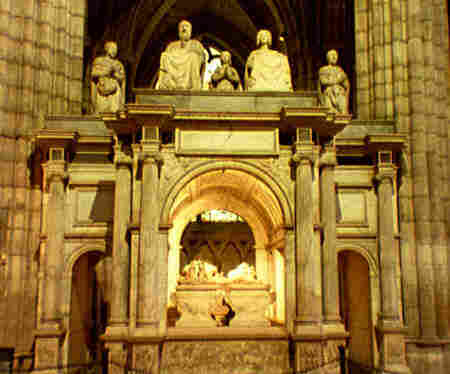
The first thing I noticed was the bare, marble feet. At the centre of the huge marble monument effigies of the almost naked monarch and consort lay, the soles of their feet facing tourists as they entered. At last I saw the human vulnerability of the monarchs. It was only later that I saw the fully-dressed king and queen kneeling in prayer, their children behind them, on the high top of the monument.

I wandered among the dead kings and queens. There was Marie Antoinette again, slightly larger than life and kneeling elegantly next to husband. And there were the plainer, earlier kings, from Clovis onward, looking stiff, still and much the same as one another.

Wandering among the royal monuments, I caught sight of a notice on one of the stiff mediaeval ladies: "une princesse inconnue" - an unknown princess. She may not have been a very significant princess but presumably, a long time ago, she thought herself an important person in the world. And now she was just a monument, much like all the others, and no-one even knew her name or which of the many dead princesses she was.

Beyond her lay another, smaller monument, no longer than a five-year-old but a miniaturised adult in polished white marble. I leant over to look at the notice - another "princesse inconnue."


Thursday, 6 August 2009

"single blessedness"

I was early for the train so I browsed among the leaflets and timetables. Special offers for train travellers attracted me, especially since the illustrations showed attractions in the southern Peak District that I hadn't visited for years, if at all.

I picked up the leaflet hopefully and began to read. One offer was free child admission with a full-paying adult. That sort of offer used to be helpful but not any more. Almost all the remaining offers were "2 for 1" admission charges. Only one offered a discount for the single traveller.

Once again, I find an assumption that everyone moves around in couples. It's not just the train companies that think this way. I've been browsing holiday websites - more in hope than with any confidence that I'll manage an exciting holiday next year. There are some good headline prices. I even thought, briefly, that I might manage the trip to Iceland I've been dreaming about since my schooldays. But the prices come with the usual footnote "Prices are based on two adults sharing a room."

I can see that single travellers cost hoteliers more than couples. But why can't holiday companies just say what the single room supplement is? Too many ask single travellers to phone in - suggesting that singleness is a bizarre state - while some holidays, offering plenty of space for couples, say that nothing is available as soon as I enter information about my solitary state. Prices rocket out of my range when I confirm that I need a room of my own - and I'm not broke.

Why can't companies cater for single people? There's nothing wrong with travelling alone - lots of people do it. Solitude has advantages although it requires some toughness and self-reliance. Almost everyone is single at some point. Single people like holidays and days out just as much as couples.
In some cases - for example when people are newly widowed - this attitude must be intensely hurtful.

Why make us feel like oddities or burdens?

Saturday, 25 April 2009

Ruskin was wrong


Ruskin's appalled words are quoted on notices and in guidebooks all over Monsal Dale. He was shocked at the coming of the railway:

"
There was a rocky valley between Buxton and Bakewell, once upon a time, divine as the vale of Tempe; you might have seen the gods there morning and evening, - Apollo and all the sweet Muses of the Light, walking in fair procession on the lawns of it, and to and fro among the pinnacles of its crags. You cared neither for gods nor grass, but for cash (which you did not know the way to get). You thought you could get it by what the Times calls 'Railroad Enterprise'. You enterprised a railroad through the valley, you blasted its rocks away, heaped thousands of tons of shale into its lovely stream. The valley is gone, and the gods with it; and now, every fool in Buxton can be at Bakewell in half-an-hour, and every fool in Bakewell at Buxton; which you think a lucrative process of exchange, you Fools everywhere!"

Now the main railway line is closed and regretted, though there is a steam railway offering recreational trips from Matlock (I haven't travelled in it for years.) If I want to reach the Peak District, I need the Transpeak bus which not only connects Buxton to Bakewell but Nottingham to Manchester. I don't expect Ruskin would approve of that either - and I find tarmac roads with traffic jams far less pleasant than rails and steam trains. For me they have the magic of antiquity.

When I think about it, I realise that the building of the railway in the Peak District must have created even more horror than today's extra runways and nuclear power stations. But Ruskin's account of the Peak District, which sees it as an untouched playground of the gods, misses an important aspect of the landscape.

When Ruskin wrote, the Peak District had been an industrial district for centuries. Before the railways there were canals and mills and mines. Land was ordered for agriculture and grazing; streams were diverted, woods planted and cut down, dry stone walls built. Nature was placed under strict control. The first tourists who saw the caverns saw the work of generations of miners, who hacked and scooped stony pathways and caves. Gradually the nineteenth century drew the inhabitants of the Peaks away from its green fields, hills and rivers to the manufacturing towns. But they returned at weekends to walk the paths they had made on familiar slopes and to clamber on the forbidden bleakness of Kinder Scout.

The walkers still take the bus towards Monsal. Last Saturday, my daughter decided to come with me. We took the bus to Ashford-in-the-Water, then climbed the hill to Monsal Head where we stopped for a pub lunch. Then we descended into Monsal Dale and the viaduct, which had looked so small from the heights, loomed above us. It seemed as much a part of the scene as the hills. One day I'll hire a bike and cycle on the viaduct - it's part of the Monsal Trail which offers a fairly flat route for pedestrians and cyclists who would otherwise be unable to explore the valley.

Our six-mile route was tougher. We balanced on rocks in a stream and scrambled through steep woodland. We came out into sunny fields and walked by rivers, canals and mills. Some walkers seemed surprised by my daughter's outfit as though her Barbie-pink university hoodie and matching pink-soled trainers were unsuitable in serious walking territory. But she made good process and was faster than me - and not just because I stopped every few minutes to take another photo.

Eventually grandeur gave way to cosy quaintness as we returned to Ashford to wait for the bus.

I keep looking at the photos from the walk and recalling the day as an encounter with nature and remoteness. But I depended on the bus to get me to Ashford and the focus of the most splendid views in Monsal Dale was the railway viaduct Ruskin so detested.

Sunday, 22 March 2009

Book-reader!


One of the merits of advancing age is increasing invisibility. By the time my hair is white, I shall probably float ghost-like down streets and be able to act exactly as I like without anyone noticing. But I'm not quite there yet.

I went to London to visit my parents on the day before Mother's Day. I reckoned I was probably even less visible than usual, slightly shuffling and convalescent after a late winter virus got me by the throat and left me tired and shaky. I stopped at an unfamiliar supermarket to get lunch ingredients and when a young woman rammed my shopping trolley into me, complaining that I wasn't quick or efficient enough at making way for her, I decided I'd probably slipped into the role of Unnecessary Older Person, as far as she was concerned. Perhaps she was too young to realise that most women are so accustomed to mild brutality and insults from strangers, that a rammed shopping trolley is hardly more than a slight annoyance.

As an older woman, I feel rather safer than when I was young. I've never forgotten the time - nearly thirty years ago - when I was walking across a university carpark and a car-load of drunken students thought it funny to drive the car at me a few times, hurling sexual insults and shrieking with laughter at their "wit." That really was frightening. I don't think they planned to hit me - though I couldn't be sure - but I wasn't sure they were sober enough to control the car, or that I could run fast enough to get away. I didn't go to the police. The headlights dazzled me so that I couldn't see their faces though I had a good idea who they were from the brayed, precise insults. The police were unlikely to take my word against a group of posh - and well-connected - young men.

That was the scariest instance but of course there were others. Men sometimes tell me I'm stupid to walk alone after dark but years ago I decided that I preferred to risk abuse and threats rather than live in a prison created by abusive strangers. I've had a fuller life as result. And by now I'm used to dealing with the occasional insult. They've tailed off as I've grown older and become more confident. I worry for my daughter, of course.

It was good to see my parents. I don't visit often enough. This was another short visit - four hours' travelling each way doesn't allow much time to stay, but at least I managed to cook lunch, wash up and deliver small gifts to my mum. I was pleased I'd made it, but more tired than usual - this year's viruses seem particularly draining.

I'd worried a little about getting the tube at Putney Bridge. Dad and I had been watching the football results and the unlikely scoreline - Fulham 2, Manchester United 0 - could result in a few disconsolate United fans on the way home. But all I saw were yellow-jacketed police - some on horseback - outside the supporters' favourite pub. Jubilant songs and chants filled the air.

Reaching the Piccadilly Line, I realised I could be standing for quite a while. The Victoria Line was closed for the weekend, pushing passengers onto other routes. The platform wasn't too crowded as I arrived but within two minutes passengers were three or four deep and more kept arriving. There was no point in letting a crowded train go in the hope of a seat on the next one. I boarded and followed the usual command to "Move right down the carriage." I was just reflecting on how shaky I felt and my probable invisibility when a young man stood up and offered me his seat. I wasn't so invisible after all - and immensely lucky. Plenty of other people who could have done with a seat were left swaying and strap-hanging. After thanking the young man, I immersed myself in my book - one of the Scandanavian detective stories to which I've recently become addicted.

My journey involved a change of mainline trains and a pause in a waiting room. The book, which involved axe murders, a bright young woman inspector and an older beer-drinking, chess-playing detective, had gripped me. I settled down for my 25-minute wait and continued with the story.

There were three other people in waiting-room: a young couple wrapped up in one another and a solitary man listening to music. It felt safe enough. Then the youths came in, giggling, pleased with themselves, possibly a bit drunk. They swaggered round, giggling. I was more interested in my book and perhaps this annoyed them. They stood in front of me, staring, thinking of an insult. Eventually, one of them came up with the epithet they wanted: "Book-reader!" They giggled. They tried it out a few more times, circling round me. I looked up, unimpressed, and went back to my book, "Book-reader!" they said again. And then one tried, bemusingly, "Sexy! She's sexy for a book-reader. Sexy for a nerd." I think I was supposed to be scared. I wasn't. They went out.

Later, when a couple of more people had entered the waiting room, they came back. They tried saying, at no-one in particular, the worst racial insult they could think of. They said it again and laughed. It plainly didn't apply to any of the people in the waiting room. They tried to start a conversation with a solitary young woman who was witting there. She dismissed them with monosyllables and they gave up, giggled and went outside again. I think the youths were beginning to feel cross that no-one responded to them - I hope they were. Perhaps it was their turn to feel invisible.

Saturday, 7 February 2009

Parkway


I changed trains at Bristol Parkway once. It was a depressing experience.

I usually like railway stations. Even the smallest and barest rural platform - Honeybourne, for instance, midway between the small village of Church Honeybourne and the tiny hamlet Cow Honeybourne - has a distinctive character. The bigger stations may have the same shops (or "outlets" as they are now called) but they also have history and personality. But all that was distinctive about Bristol Parkway was a determined characterlessness. I recall it only in terms of platforms, notices, stairs and subway that were interchangeable with a multitude of other railway stations. There may have been a cafe but, if so, it was a cafe whose customers and staff had been drained of geographical or regional identity and, like the food, existed only between places. Bristol Parkway didn't feel like a real station - more like an intersection on a motorway where people could pause for a few moments so long as they didn't mistake their existence there for real life.

There are stations I've visited only once or twice that I shall never forget: Grindleford, and Worcester Shrub Hill. I've even developed affection for that difficult multi-platformed interchange, Clapham Junction. But Bristol Parkway belongs in a bleak vision of the future - unless it's the present that has stolen up on us.

A new Parkway station has landed in the East Midlands. To be accurate, I think people may have put it there, since I saw lights once or twice
when the train rushed past the spot in the past few weeks. I haven't used it. It's another dull, anonymous halt, with train information spelt out in orange dots on electronic noticeboards. Sometimes one or two people get on or off the train there when it stops. Sometimes I see a uniformed member of station staff. But I'm growing fascinated by the large glass boxes labelled "Waiting Room." They are filled with identikit, hard-to-vandalise chairs which have the appearance of occupying an uncertain space between comfort and discomfort. The chairs are (have I got this right?) set out in rows in the glass waiting rooms. I have never seen a human being in the waiting rooms - perhaps the chairs are too terrifying.

East Midlands Parkway Station is for motorists. Apparently this makes it a green initiative. Travellers are encouraged to get in their cars, drive on the M1 and turn off towards the railway station. Or they can arrive by bus, if they first catch a plane to East Midlands Airport. I expect it's a quicker journey than the buses that already run to other East Midlands cities. The publicity is all in favour of the expensive new stations. Meanwhile the service has been cut at the small local stations in the area - the stations with character. Some little stations on the line have lasted 180 years, founded in the days of the Midland Counties Railway. There are histories, memories and railway buildings that have been in used since Queen Victoria was young.

And then there's East Midlands Parkway

Thursday, 1 January 2009

"The waies deep, the weather sharp, the daies short, the sun farthest off"


I came across that account of winter through T.S. Eliot's poem, "The Journey of the Magi." It's not a poem I greatly admire but I dutifully followed the reference in Southam's student notes and discovered the sermons of Lancelot Andrews. I couldn't agree with Andrews' theology - he was a high church Anglican and defender of the Divine Right of Kings - but I loved the way evocative phrases emerged from his careful translation and exposition, often in the movement between Latin and English. The passage quoted in the title of this post concludes by drifting into Latin and back to English: "in solstitio brumali, the very dead of winter." Andrews may be trying to conjure up the journey of the wise men but, for me, what he offers is a harsh English winter, thick frost on the countryside and the muffled crackle of frozen stubble underfoot.

This New Year, the hard frost and fog seems to lock people into their separate houses. But the two young people and I set out for our separate new year celebrations: one to a party, one to a club and me to a dinner party prefaced with champagne and concluding with single malt whisky.

I reckon I had the best of it. I could hear the conversation, which (in the case of my fellow diners at least) sparkled while the food was excellent. There was even a special vegetarian dish for me - chestnut a la bourguignonne - served with side dishes of savoy cabbage and a delicious potato and celeriac mash. I'm lucky to include a terrific chef among my friends.

There were hints of other celebrations as I went out - young people, bottles in hand, checking house numbers. And at midnight the fireworks began at Nottingham Castle and the middle-aged, black cat whose house it was hid behind the bookshelves.

The only thing to spoil the evening was the lack of public transport. I contemplated cycling both ways but was deterred by the predicted minus 4 temperature. The combination of ice and alcohol would, at least, make me a danger to myself. And I feared the number of drunk drivers on the roads.

The dinner party was in Nottingham. Usually there are night buses, running every hour, but the companies claimed there was no demand for transport on the evening of New Year's Eve or on New Year's Day. The final buses ran at about 8.00 p.m. Taxis charge double in the early hours of New Year's Day. This is reasonable enough - years ago I used to babysit and welcomed double pay at Christmas and New Year. But not everyone can afford taxis. I worried about the risk from drink-drivers and feared that young revellers in skimpy party clothes might succumb to hypothermia when walking three or four miles home.

I reached home safely. So did the young people. The frost continues. There may be a little snow, or fog. And that takes me back to Lancelot Andrews:

"The waies deep, the weather sharp, the daies short, the sun farthest off, in solstitio brumali, the very dead of winter."

Monday, 25 August 2008

Taking the tram


There's a point at which a new place ceases to be strange and foreign without becoming quite familiar. That's particularly true of places I love. There are places in Northumberland which I could explore with confidence. I might even swim in the North Sea off Bamburgh Beach without being particularly aware of the louring castle. I could direct a tourist to Grace Darling's grave or Barter Books in Alnwick, though it's years since I've been there. And, although I couldn't give directions, if I were in Edinburgh I would confidently find my way to the Grassmarket and negotiate the different levels, sloping streets and bridges.

I'm not quite so familiar with Paris, but I no longer feel exactly like a tourist. Going to the boulangerie remains a pleasure but the word "tabac" no longer produces a frisson of excitement. I haven't "done" all the tourist sites but I no longer feel so touristy that I need to do more. Instead of looking at galleries, I want to see exhibitions - Mantegna at the Louvre seems particularly tempting but probably not possible. Instead I want to absorb Parisien life. I may not be able to pass for a Frenchwoman, but I like to think I might become a temporary Parisienne.

I was restless and decided to spend an afternoon wandering. At Porte d'Italie I took the tram with no particular destination in mind. The Indispensible showed that there was an exhibition centre at Porte de Versailles so I decided I would get off there. Then I could walk or get a bus and perhaps head for the centre. One possibility seemed a Metro to Solferino and the Musee d'Orsay, but it was a little late and I wasn't sure I had the patience or concentration for art.

So far as I could tell, there were no tourists on the tram. I was the only passenger consulting a map. I gazed out of the window for places to visit on my return journey. The park at Cité Universitaire seemed a possibility. I admired the shiny exterior of the
stade Charléty, with its elegant curves, and briefly wondered whether to stay on the tram till the end of the line.

The tramway, circling central Paris, took me through areas of wealth, student quarters, places where people work hard for low wages and check the prices if everything they buy. I suppose people who ride the tram daily get used to those contrasts. I was being a tourist of everyday Paris and this struck me as much as the patience of people in queues and the tired helpfulness of drivers and shop assistants.

There was no exhibition at the Porte de Versailles. I hadn't expected one and headed in the direction of central Paris. I contemplated the Metro, which would take me quickly to the museums, the Ile de la Cite and the Seine, and decided to walk. I thought I might stop in a cafe for an espresso but many cafes were shut for the holiday season. Instead, I entered a Monoprix and browsed among the household implements before sitting down for a coffee. I lingered a while before walking further and devised plans involving buses towards the centre. Then I saw the bookshop.

I wasn't looking for books - and was trying to avoid stationery, which lures me into extravagance. But I stayed for a long while, buying a postcard, a book bag, a slim anthology of well-known French poems and a copy of Phedre. It took me back to a production by the Glasgow Citizens, some time in the 1980s - the last time I saw Glenda Jackson on the stage. But what I remember most is the voice of Robert Eddison outlining the tragedy and horror in the messenger's speech. That voice seemed to link back to the theatre of the past and conjured a link to the era of greasepaint, footlights and shattering emotion. No other voice in theatre has affected me quite so much, though Ralph Fiennes came close when he played Henry VI for the Royal Shakespeare Company.

I came out of the shop and emerged from my reflections to find it had rained. It was later than I'd intended - time to move on.

Instead of heading to the centre, I cut along another road, then another and bought olive bread in a boulangerie. Then I started to look at bus stops and found a route to connect with the tramway. (I was pleased with myself for remembering that a stop was called "George Brassens.")

Back on the tram, I had to stand. Two minutes after I boarded, the rain fell, torrentially, and I gave up my plan of walking in the park. Perhaps a beer at Porte d'Italie, I thought. But the rain continued and, when I left the tram, I was thankful that tram stops had places to shelter. I stood for a while, coatless, waiting for the rain to lessen, trying to be patient like a real Parisienne.

Friday, 15 August 2008

Tube trains and cab drivers


I photographed this Isle of Wight train for my dad. He has a personal connection with it. This was part of the stock he kept running in his work as a fitter for London Transport.

We took the Fastcat to Ryde. Then the little tube train hurtled us along the track to Sandown. I remember taking a steam train there, when I was very small - at least, I think I remember. It was probably part of a Sunday School outing. But in 1967 the Isle of Wight railway was electrified and the tube trains arrived, freed from underground tunnels to trundle through fields and past houses.

I've posted a few comments on swimming in the sea elsewhere so I shan't write about that particular pleasure here. I liked the Isle of Wight and wondered if it would be a good place for holidays in another year. I'd like to trace the literary connections.

One of the attractions of the Isle of Wight is good public transport. There seems to be a good bus service as well as the trains, and there might be an opportunity to hire bicycles. And if my heel recovers, I could do plenty of walking too.

I was planning to use buses in Southsea and Portsmouth until Bryn, the guest teenager, pointed out that, with four of us, minicabs would probably be cheaper. So we took to using Aqua Cars and saved time as well as cash. They were splendidly prompt and efficient, except on the last day when a sudden downpour raised demand.

We never had the same cab driver twice. But mostly they were friendly and all were helpful. Occasionally music on the radio wasn't to our taste but we all enjoyed listening to The Now Show while heading to Portsmouth Harbour Station on our way home. There's something very cheering in finding that a cab driver laughs at the same jokes.

Cab drivers gave us advice about local shops and pedestrian walks. They helped us load and unload shopping. And, to my delight, one turned out to have a wide knowledge of English literature.

I discovered this when I asked about the book he was reading. He wasn't reading while driving but the book lay face down beside him with his place marked - he was evidently reading it between fares. It was The Amazing Adventures of Kavalier and Clay by Michael Chabon and the driver outlined its themes with enthusiasm. The subsequent conversation led our driver into brief discourses on a range of topics including the rise of the graphic novel, American fiction, the pleasures of postmodernism (introduced almost apologetically with a clear one-line explanation), the contrast between the playful experimentation of Sterne's Tristram Shandy and what the driver insisted was the materialism of Richardson's Clarissa. I fear the driver was disappointed in my preference for Richardson and my acknowledgement that I have read Clarissa three times.

I didn't want that journey to end. I wanted to know more about the cab driver's tastes and get further book recommendations. But I expect he wanted to get back to his book.

I've now bought Kavalier and Clay and am planning another attempt on Tristram Shandy - perhaps it's time to stop dipping and read it from cover to cover.

Now I'm back to buses and trains. Unfortunately bus and train drivers have fewer opportunities to share their literary tastes with passengers.

Friday, 1 August 2008

To the Bois de Vincennes


I spent the morning in Ivry on an errand for a friend. I'd never been there before and found it delightful. There were no tourist sites - or if there were, I didn't notice them. What I discovered was a small town within the Paris metro, apparently peaceful and cared for by its inhabitants. For a while I wished I could live in Ivry.

My errand included an inspection of a highly-recommended boulangerie/patisserie. I spent a euro on one of their specialist baguettes, put it in my bag and headed towards the Bois de Vincennes.

The word "bois" was enough to attract me as the heat increased. I dreamt of breezes in woodland. The chateau had also been recommended - I'd heard it was the scene of Henry V's death and thought that perhaps I'd sign up for a tour. But my first stop was close to the Porte Doree, where the Palais originally called the Musee Coloniale has now become a Museum of the History of Immigration, with, for historical reasons, an aquarium in the basement.

The palais is a glorious example of inter-war architecture, but the reliefs and murals recall the prejudices which were endorsed by the French government when the Palais opened as the central hall of the Colonial Exhibition of 1931.

The new museum has taken those prejudices as its starting point in mounting a splendid exhibition - about the exhibition of 1931. The Colonial Exhibition was a huge, popular spectacle. Indivdually, many of the exhibits told of complex cultures and artistic achievement. However the effect of showing all France's colonies together diminished this element. The powerful and the banal were jumbled together, offering a vision in which the overpowering impact was of quaintness and difference. Talented citizens from the colonies took part but the exhibition as a whole glorified French colonial power and took for granted the superiority of the French to their colonial subjects.

Reflecting on 1931, the current exhibition doesn't permit a simple response - it would be too easy to say "Things were bad then," and pass on. But the exhibition, which merges with the permanent exhibits, shows the complexity of what the exhibition offered and what it achieved.

There are films, installations, sculptures, photographs, information boards. And there are the identity cards and simple records of people accepted - or rejected - for residency or citizenship. Each entry in a register, each tiny photo represents a whole life.

The exhibition explores ideas about race and immigration before the exhibition, the protests against the exhibition (which led to an anti-colonial exhibition, and the influence the exhibition had on the arts in France. There are the histories of different groups of immigrants. The lucky were accepted as French but the less fortunate, who included Sigmund Freud and Pablo Picasso, had their applications refused. There's one chilling photograph from the early 1940s: a group of men stand in front of a hut, looking towards the camera. Without the caption I wouldn't have known its purpose. The picture was taken for a major French newspaper during the occupation. The men, photographed in a concentration camp, had been selected to demonstrate different semitic types - presumably so that French citizens could identify and denounce their neighbours.

I didn't emerge with an easy solution or simple summary in response to all the prejudice and hatred. I became aware of a multitude of perspectives and numberless experiences. I wanted to read more but was growing tired. The effort of reading in French and trying to follow a largely unfamiliar political and economic history, was lowering my concentration. I paused for an espresso, then headed out, baguette in hand, to eat as I walked through the Bois de Vincennes.

I got as far as the entrance to the zoo and looked at the outside of the chateau. I decided that hiring a boat or bicycle must wait for another visit and simply wandered through the paths, enjoying the cool breeze, drinking water and eating torn hunks of bread.

Eventually I turned back, only to realise that I was on a different path. Inidispensible in hand, I worked out a new route back to my friends. It involved changing buses, taking a metro and catching another bus. Luckily this was Parisien public transport - regular and reliable. I had one wait of more than ten minutes but the route worked perfectly.

I was welcomed by the offer of tea or a drink, followed by one of Jana's splendid meals.


I think it was over supper that I learned that my hosts' son, who was born in Paris,has never lived anywhere else, and speaks French as his first language, missed his right to automatic French citizenship by a month, under the reforms of 1992. Although they are long-term residents, neither of his parents is a French citizen. Though their son takes an interest in the countries of both his parents, he is plainly, above all, a Parisien - but not, it seems, French.


Paris-on-sea

I'd heard about Paris Plage but never been there before. This year there wasn't much publicity. I couldn't find a separate leaflet so settled for a more general leaflet about summer events in Paris. It didn't tell me much but, after a delicious Lebanese lunch in the Carrousel of the Louvre (the food court is excellent for travellers on a budget), I headed past the glass pyramid to the banks of the Seine. There the blue banners directed me towards the "plage".

It's not a real beach. Apart from the month of Paris-Plage, it's a fast road. But from mid-July to mid-August, traffic is diverted and replaced by sunloungers, boules pitches, showers, and sports activities for children and adults.

I'm not someone who lounges in the sun. My skin parched in the heat despite occasional breezes so I welcomed the showers where water was dispensed in a fine mist which drenched eager children but also supplied a barely visible sprinkling of moisture to passers by. There were fountains too, where we could fill water bottles.

Wandering alone, I was an observer rather than a participant. What I saw was Parisiens' Paris - the place where the locals relax and enjoy the summer if they aren't lucky enough to join the big getaway.

Later I found my way to the Hotel de Ville (the Paris City Hall). The square in front had been transformed into a temporary (ephemeral) garden with green plants and lakes, to promote the ecological gardens of the city. There was mini-golf for the children and stand dispensed Paris water, free of charge, with fresh mint or lemon added. I joined the water-drinkers at their tables, sipping and savouring my water - and trying to swallowing the huge sprig of mint in the glass.

I need to be economical this year - the trip to the Comedie Francaise was my big extravagance - so much of my exploration consisted of walking around Paris. However, I'd invested in a Navigo, which meant I could take buses, trains or metros when I wished - and the guide called the Indispensible made it easy for me to find the best routes. But every so often I wandered freely, finding unexpected views, with a sense that I was walking through history.

On a sunny day, history seems calm and distant. It's easy to forget the real violence - or that pain and grief were felt as acutely in preceding centuries as they are now. It's too easy to treat Paris like any theme park that nourishes nostalgia - and forget the history which links the city to the world. But the history of Paris has affected the way people understand their human condition. I know too little of it but have picked up episodes like a series of snapshots: the theological debates in the time of Peter Abelard, the Revolution, the Napoleonic era, the siege and commune, the occupation, liberation, Sartre and de Beauvoir in a cafe.

In the past couple of years I've been acutely aware of signs recalling the occupation and its atrocities. Pausing on my calm, sunny progress, I saw another plain memorial:

TO THE MEMORY
OF THE PUPILS OF THIS SCHOOL
DEPORTED BETWEEN 1942 AND 1944
BECAUSE THEY WERE JEWS,
INNOCENT VICTIMS
OF NAZI BARBARITY
WITH THE ACTIVE COMPLICITY
OF THE VICHY GOVERNMENT.

THEY WERE EXTERMINATED
IN THE DEATH CAMPS.


That's too close to be the safe past. I have met some of the few survivors who have camp numbers tattooed on their arms.

I was impressed by the acknowledgement of complicity. I thought of the children deported from Britain with their families after their claims for asylum have been turned down. I recalled what I had read of dawn raids. Children are easy to locate and deporting a whole family helps the authorities meet government targets. What happens to those children who suddenly vanish from British schools, who are bundled onto flights to unfamiliar lands where they face hatred and oppression?

Perhaps one day Britain will erect memorials to them too. I wonder if the British will be as honest as the French. Will the British government and people acknowledge even partial responsibility for what happens next?


Wednesday, 30 July 2008

In the Salle Richelieu


It was my second visit to the Comedie Francaise but my first evening performance. The play was Cyrano de Bergerac and I'd prepared myself by re-reading it in French. I didn't expect to follow every word at performance speed but reckoned I could get by with a decent knowledge of the text.

Before the play, we ate at a small bar-restaurant named after Ragueneau, the pastry-chef in the play. The internet site through which I found it claimed that the restaurant was on the site of the original patisserie but there was no attempt at "authentic" decor or recipes. However, there were quotations from the play in the menu and house wines from Bergerac.

The performance began at 8.30 - late by British standards. I wondered if everybody would be dressed up but, so far as I could tell, no-one in the audience had dressed to be seen or to show off their wealth. Parisiens take more care with their clothes but there was no great difference between theatre clothes and clothes for the office or metro. Nor was it evident - as it often is in British theatres - who would be sitting in which part of the theatre. The audience was a group of people united in their interest in the performance and that was all. It was much more relaxed than attending the theatre in Britain.

The setting, however, was extravagant and luxurious - all white, red and gold with chandeliers. The bar was the grandest place of all but, in the interval, it was full of people drinking soft drinks from cans and water from bottles - the few wine-drinkers were in a small minority.

I'd splashed out on mid-price (26 euro) tickets, which bought seats in the centre of the front row of the first balcony. It gave an excellent view of the stage and was more comfortable than a seat at the side - and this mattered since the performance lasted nearly three and a half hours. I wanted to soak up every bit.

I've written a little about the production elsewhere and it's hard to sum up my feelings, especially since the play came from a theatrical tradition with which I'm not entirely familiar. But Michel Vuillermoz was a magnificent Cyrano. He was less romantic than others I have seen and more comic - but in the end seemed the most credible too.

Strangely, part-way through the performance, I noticed how white the cast was. (That hadn't, I think, been the case when I saw the Fables of Fontaine.) I don't know whether this was usual in France (though Peter Brook's productions suggest otherwise) or whether the cast just happened to be all white in this production. But it seemed strange in the light of my theatre-going in England - and not, I think, true to either period to which the production referred. The play even has a brief, one-line appearance by d'Artagnan, whose 19th century creator was not white.

There was a long succession of curtain calls and it was nearly midnight before we left the theatre. It was cool as we descended into the metro - still quite crowded. Even well after midnight the buses were running on time in the suburbs beyond the periphique.

Monday, 2 June 2008

East Midlands Trains and the duty of care


When I was growing up, I felt secure travelling by tube and train. It helped that my dad worked for London Underground, mending the trains. Books like The Railway Children helped too. (Somehow I skimmed over the end of The Last Battle, even though I was a C.S. Lewis fan.) We had - or rather, my brother had - a train that went on a track past platforms and grass and trees. It was a wonder, with scenery constructed by Dad from kits and papier-mache.

I wanted my children to travel by trains too. It helped that we lived near a station and that trains were the quickest and cheapest way to town. As the children grew older, I bought them their young person's railcards and was anxious when they made their first train journeys alone. Children need to learn to travel independently. Earlier this year my son, who is now 16, went to London by train on his own to meet friends. Last weekend he was booked into a Quaker event. I saw him off on the train and gave him written instructions about the underground train he needed and where he was to meet the others. While he was on his way, he rang to check he was going the right way - and he sent me a text to say he'd arrived safely.

When I was my son's age, I knew the important rule of travelling alone. My parents told me, "If you lose your ticket, tell the guard and give your name and address." Of course, things have changed now. They should be easier since the internet makes it possible to buy tickets on-line.

I bought my son's ticket on-line using the East Midlands Trains website. That let me collect his tickets and seat reservations at my usual station - and I checked they were safely tucked in the wallet with my son's railcard. After all, they cost nearly £34.

But on Monday evening my son rang. He'd got his seat reservation but somehow he'd lost the return half of his ticket that went with it. And the people at St Pancras wouldn't let him on the train. To make things worse, the battery on his mobile phone was dying.

My son doesn't look any older than 16. He'd said goodbye to the organisers of the event and was alone in London with his suitcase and guitar. He didn't know what to do.

That's when I rang East Midlands Trains. I asked if someone could let my son on the train, offering to get a train part-way and join the same train so that I could pay the excess to the train staff. No, I couldn't do that. I asked if I could pay his fare by credit card so that he could get the train. No. So what could I do, given that my teenage son was stranded in London? I could go to my local station and ask the ticket office to help. It was a bank holiday evening and, although trains were still running, the ticket office was shut. The man on the phone gave me another number that might help, but warned me I'd have to pay full fare plus a £10 penalty charge.

It had gone 7.00 and the last train back left London at 8.30. I found someone else to ring the number and buy the ticket, hoping that my son, now without a working mobile phone, had heard my last advice to stay by the ticket office. I headed by train to Leicester. I could perhaps get help there and, if nothing else worked, I could get a train to London and stay there with my son. By this time I was very anxious.

Apparently the new phone number was useless. Someone had to reach a mainline railway ticket office to organise a replacement ticket - and it cost £73.50. Luckily my son was by the ticket office at St Pancras as required (my advice was based on guesswork). He was able to take the ticket and run for the next train. Meanwhile I was in Leicester and, although I knew a ticket had eventually been bought, I didn't know which train my son had caught. The station manager at Leicester was helpful and sympathetic. He contacted St Pancras and even found out which train my son had boarded. I waited to meet him for the return journey.

Accidents happen. People lose tickets. Younger, less-experienced travellers are more likely to have problems. But they need to learn independence.

Under-18s don't have credit cards to pay for new tickets. They are unlikely to have much money with them. My son got back safely only because it was possible for someone to drive to a mainline station (I don't have a car) and pay a large sum of money on my behalf by credit card.

Not everyone has a car.

Not everyone has a credit card - or enough money to pay a huge excess fare.

What would have happened if my son had planned to catch a later train? It took more than two hours to arrange for his return journey.

The East Midlands Trains staff I spoke to by telephone had no helpful advice to offer. They reckoned it wasn't their problem if a 16-year-old, still at school, was stranded in London, 120 miles away. It was his problem - and mine.

What would have happened if it hadn't been possible to pay the £73.50 East Midlands Trains demanded for a one way fare? I suppose my son would have been left to beg, or hitch, or sleep rough at the station. I wonder how many young people are forced into this position.

I'm told that in other countries, people have a legal duty of care for one another. Here the only duty of care seems to be for company profits. Train tickets used to be checked by the train guard - a comforting name that suggested he looked after passengers as well as the train. These days the people checking tickets have different titles: they are train managers and revenue protection officers.


It's nearly a week since I e-mailed East Midlands Trains to complain. No-one has replied. I'm not surprised. I've e-mailed East Midlands Trains before. It can take months to hear from them - if they reply at all.


Sunday, 11 May 2008

Who's in charge?


It's summer. Suddenly the centre of Nottingham, which has been almost empty in the cold and rain, was thronged with people. I'd forgotten about the noise of happy crowds. In the Old Market Square a French market drew smiling queues. I couldn't resist the quince jelly or chestnut jam, let alone a wonderful mustard "aromatisee" with goats' cheese and basil.

Real baguettes were a necessity. And although French cheeses are more expensive after the change in the exchange rate, I succumbed to the lure of some favourites: a good comte and emmenthal, a thin slice of tome de Savoie and a small piece of Roquefort. They offer a taste of holidays - just a taste as I asked the young man on the cheese stall for "cent gramme, seulement."

He served everyone with a flourish, in French when the customer spoke French but otherwise in an English sprinkled with French words and intonations, rapidly charming customer after customer. He was swift as he sliced and wrapped cheeses but always found time for smiles and politeness - and he had a happiness in his work that infected everyone. I was nearly tempted to extravagance.

Nottingham must have one of the most crowded city centres in Europe. It's compact, held in by a dull inner ring road, Maid Marion Way. (Maid Marion deserves better.) The Old Market Square has recently been rebuilt with fountains where children play when the weather is hot. Much of the central area has been paved so that only buses, trams and taxis trouble pedestrians. Despite the hilly terrain, the centre itself is as flat as it can be, so that it's easy for wheelchair users to navigate.

Around the city, traffic crawls along access roads and car parks are crowded. There have been debates about a congestion charge but the city council has come up with a different solution: taxing car parking spaces at work. I haven't read through the arguments as I don't live in the city but I have noticed that public transport is excellent, especially in the day-time, and there are the usual park-and-ride schemes. In a small city, traffic adds to pollution. Not everyone enjoys the sunny weather in the city centre; some choke or gasp.

Yesterday's Nottingham Evening Post published the response of businesses to the proposed parking charge. "Impose the charge and we'll quit the city," they say. The threat - to withdraw employment from the area - is a serious one. It raises a serious question: who's in charge?

Nottingham electors vote for their council. If they don't like the parking charge, they can vote the council out. It's called democracy and, for all its shortcomings, it's a decent, fairly open system. But when businesses threaten publicly-agreed policies, they short-circuit the democratic process. Are our cities run by elected councillors or by wealthy corporations?

Companies have always influenced politics. Councils and countries want thriving, successful economies. Today they court businesses as the providers of wealth and apparently fail to notice that they give more than they gain. Companies demand tax inducements, special provisions, an education system that serves its needs, subsidies, consultation - even deference - when the government proposes new policies. In a global economy, the threats of big companies are huge and dangerous. They can relocate where workers are cheap and unprotected - and where no-one expects them to care about the environment. They can get together and threaten mass unemployment. And despite legislation, they can achieve a near monopoly in the supply of necessities. Small traders have to look out.

If councils and governments defer to businesses, we don't live in a democracy. Bribes and blackmail govern our lives. Of course, there are organisations which could protect democracy against the corporations: the World Bank, the World Trade Organisation, the European Community and the United Nations. But these seem to have fallen for an absurd notion which correlates the free market with freedom and democracy. And it's not the same thing at all.