Showing posts with label tourism. Show all posts

Monday, 23 November 2009

After the murder


Murders always draw crowds. People hang around the site. These days little offerings of flowers in cellophane appear, sometimes with childish mementos - teddy bears and consciously cute toy animals.

The murder of an archbishop in his cathedral just after Christmas created a sensation. He was stabbed to death in a tussle for power between church and state. His death was a victory for the church over the English crown. Sometimes states and their rulers go to far and have to retreat.

The archbishop was Thomas Becket, Henry II's worldly chancellor who shifted his loyalty to the church when he was ordained priest and, the next day, created Archbishop of Canterbury. Thomas was murdered at the end of 1170. Two years later he was declared a saint. Four years after the murder, Henry II walked barefoot in penance through the streets of Canterbury while monks flogged him. I bet the tourists loved it.

They weren't tourists in the modern sense, of course. Mediaeval pilgrims got more than souvenirs, though there were plenty of those - every site of pilgrimage had special badges for sale. It's easier to understand that now than the religious impulse, especially since the religious element was so much taken for granted that it's hardly discussed, except by people who mock it or disapprove. I can just about understand the attraction of a partial or plenary indulgence, which offers time off Purgatory, although my protestant upbringing taught me that Purgatory was a fable. But the urge to go on pilgrimage seems more complex that the simple exchange of hardship now (with a bit of tourism thrown in) for the relief of suffering later.

These ideas have whirled round my mind since I visited Canterbury at the weekend. It was a brief trip to see my daughter but she needed to dye her hair and I liked the idea of a couple of hours of solitary tourism. I thought I'd go to Evensong in the cathedral. I like Evensong, especially when it's sung by a good choir, although I fear my motives were more secular than religious.

I didn't make it. Arriving at a quarter to four, I discovered that Evensong had begun half an hour earlier and, if I wanted to enter the cathedral, I would have to pay the £7.50 admission charge. I decided against it and wandered off, looking for somewhere else to visit.

I must have walked past the Eastbridge Pilgrims' Hospital on my last visit to Canterbury but this time I glanced inside, saw that the admission charge was a mere £1 and decided to look round. The man on the desk talked about the history of the hospital and then I was left to wander round the hospital itself - now below street level - and the refectory and chapel outside.

I was glad I went in. According to the notice, the building was for poor pilgrims - people whose pilgrimage involved sleeping in fields and under bushes on the way. At the hospital they would receive a place to sleep - not a bed but shelter and a shared rush-strewn alcove. Then there would be a meal upstairs and opportunities to pray.

It hadn't occurred to me that there were poor pilgrims. I've read Chaucer, writing a couple of centuries after Becket's murder. He left me with the impression that pilgrimage was an amusing Spring excursion for the rich. But this twelfth century foundation offered shelter to those who couldn't afford a night's bed and breakfast in one of Canterbury's expensive inns. I began to think about the nobleman who founded the hospital. All the notices gave was a name - and the suggestion that the money he gave ran out quite soon. I wondered what had prompted him to found the hospital and what he thought of the poor pilgrims who stayed there. I read that another early donor was Roesia, Becket's sister. I'd never thought about Becket having a sister or how his family might have felt about his murder.

The hospital seemed a warm, friendly place and I was sorry to leave. There was a chill in the dark street outside. On the bridge a young man was bedding down with his dog, wrapping a sleeping bag and blanket around them both. He drew an old black bottle from his backpack, removed the stopper and took a swig. I hurried on to the station.

Tuesday, 8 September 2009

The writing on the wall


When I was small, I went to Madame Tussaud's eager for the Chamber of Horrors. I rushed past the rather dull waxworks of unknown famous murderers. I wanted to see something horrid and scary, and to stroll on unafraid. It was something to do with testing courage, I think.

Children still love dungeons and horrors. They read the Horrible History books and learn details of torture. They haven't quite grasped - as I hadn't - that torture hurt people like us. Turning torture into a tourist thrill with wax victims, fake blood and feigned screams suggests that it's not quite real and, if it did happen, it was a long time ago to people wearing fancy costumes who talked rather differently from us.

We tend to ignore other people's pain, unless we're revelling in it. I'm startled when I see a teenage girl got up for a party with a gold cross - even a gold crucifix - worn on a chain. The twisted body of a man tortured to death is so familiar that it's lost its power to shock. We don't attend public executions but I've watched footage from real wars while eating supper in front of the TV. True crime sells well even if misery memoirs have waned in popularity.

We're protecting ourselves, I suppose. If I think about killing, torture and suffering today - really think about it and try to feel what it means - the thought becomes unbearable. The degree of suffering threatens to paralyse me but I should take action and protest.

Every so often the bleakness and pain of prisoners' lives reaches me. Wandering round the Chateau de Vincennes, I read notices which explained how the king's rooms had become cells where prisoners had sometimes been held for years. Usually prisoners find a means of scrawling or carving their names into the walls. There was less carving than usual at Vincennes. Instead the prisoners, who were often wealthy, had obtained paint and decorated their cells. This was no prison for paupers, whose lives were less important. The prison paintings of Vincennes are careful and accurate renditions of swagged curtains and lit candles on candelabras.

The plaster had begun to flake away before restoration was begun and I had to peer carefully to make out these creations of nostalgia and longing. There were words too but I couldn't make more than a fragmentary meaning:

"... ns la nuit de la tombe un jour desen...
..................................re nos noms ................
....la ..............................monde .....................
.... mais .....................rite profonde .............
P0urquoi ......................................................."

[......?.. the night of the tomb one day..?.....
...................................?..our names ...............
...the............?.....................world ....................
...but.................................?...deep..................
Why ..............................................................]

And after that, there's a word which might be "larmes" [tears] - but the more I look the less sure I am. I can understand nothing.

Saturday, 5 September 2009

Loving Paris


Arriving at the Gare du Nord, I was equipped with the carnet ticket that would take me to Montreuil. I like to keep fresh carnet tickets in my purse, telling myself that I have the tickets ready and therefore I must be back in Paris soon. I keep old tickets and use them as bookmarks so that every so often, when I pause in my reading, I'm reminded of journeys in the city I love.

This time I was over-confident. I didn't read the sign telling travellers to push their cases ahead of them. Instead I walked through the automatic gates pulling my suitcase behind me. They closed sharply and my case was trapped.

I was, of course, embarrassed. But a fellow-traveller, seeing my hopeless efforts to tug my case free, came to assist and quickly solved the problem. "You need a navigo," she told me (in French) and started asking other travellers whether they could help me by loaning one. Within a couple of minutes a young man realised what would work and laid his navigo on the panel that would recognize him as a legal traveller. The gates sprang open to admit him, the woman pushed my case through and went on when I'd hardly finishe stuttering my thanks.

It's hard to manage on the metro with a heavy case. The lines must have been built separately so the connections between them involve long tunnels, steep staircases and only occasional escalators or lifts. Sometimes I struggled alone but quite often people came to my help - smartly-dressed young people insisted on helping and so did one of the vendors of cheap toys and fluorescent Eiffel towers who left his pitch in the tunnel to run up a flight of stairs and help with my case.

Even with the help, my feet ached from the journey. Somehow they acquired small cuts and blisters which made walking difficult for the first part of the week. Perhaps the pain in my feet combined with my distaste for Versailles to make me less sympathetic than usual to the momuments to the French Republic.

I can't love the Panthéon. It's fine from the outside and when I stook in rue Soufflot under a dark grey sky with thunder crashing and lightning streaking across the sky the building came into its own. But the vast interior with its huge sculptural representation of the Convention doesn't grip me as much as the colourful Gothic delights of the much smaller Sainte Chapelle. Nor do I enjoy the collection of great men in the crypt (one woman is honoured there - Marie Curie was added in 1995). There are aspects to enjoy. I was amused by notices explaining how several people initially honoured at the Panthéon had later been demoted and buried elsewhere - even in death, it seems, the great men and their supporters were jostling for distinction. But it was good to see a memorial to Toussaint l'Ouverture and I could remember watching part of the ceremony in which the elder Alexandre Dumas was finally moved there in 2002. But it's part of the assertion of national greatness on a monumental scale which fails to touch me. In the same way, when I look at the Arc du Triomphe, so vast on its traffic island that it diminishes its visitors into insignificance, I feel regret rather than admiration.

Among all this neo-classical monumentalism, the Eiffel Tower is striking because it's so plainly linked to a people's Paris. It's a work of craft as well as art - whenever I see it I think of the skill with which it was designed and the hard work which created it. I've been to the top of the Eiffel Tower only once, when my son urged me to conquer my fear of heights. (That fear left me a year or so later but I faced my fear and got to the top - I still have the ticket to remind me.) But there's nothing intimidating about the Tower - it doesn't celebrate great men or the power of kings or state but human achievement in a city.

My favourite places aren't the great Haussmann boulevards, so convenient for crowds or armies and tanks. I like the small streets like the rue Mouffetard where people wander and work and shop and worry. I like places where the workers of Paris sit and talk at café tables the moment there's the faintest gleam of sun. I enjoy the everyday life of the city which can be rough as any city but which also has space for casual kindness. I'll remember all the sightseeing from my visit - and there's much I haven't mentioned here. But I'll also remember a comfortable basement cinema where the staff made viewers welcome, a hospitable African shop in Montreuil which serves - for 1 euro - the best espresso I've experienced in Paris, and a friendly Belgian pub near the Panthéon where happy hour starts at 4.00 p.m. so that draught Leffe arrives in double quantities.

Tuesday, 1 September 2009

Bare feet and unknown princesses


I was doing Paris on the cheap - and on my own. None of my friends were there but Anna offered the loan of her house in Montreuil. I needed to decide how to manage my holiday and make my money last.

Obviously, being alone, I wouldn't need to eat out. A regular morning coffee and the occasional pression - Leffe, by preference - would be bound to keep me going. And in Paris you can almost always find a boulangerie when you need one. I could have a good breakfast in the mornings and make myself an excellent salad with wine when I returned home.

I decided the time had come for the kind of tourism I'd been putting off for years. A web investigation told me a 6-day museum pass would be a good investment if I was serious about sightseeing. It costs 64 euros but many of the places I wanted to visit cost between 8 and 10 euros, and I reckoned I'd probably visit two or three in a day. It has the additional advantage of letting the holder bypass the long queues for tickets.

The metro was easy too. Thanks to Gerard, I already had a navigo (the French equivalent to the London oyster card) and had been educated in how the pricing systems work. I checked the zone map on the internet. Versailles was in zone 4 so it would be sensible to go on Sunday, using a 4-zone mobilis which allows flexible travel for the day. Then I would load a 2-zone weekly carte orange on my navigo from Monday. The carte orange, which is now virtual and therefore no longer orange, always starts on a Monday. It's a bargain for anyone staying for most of a calendar week. For just over 17 euros I could travel by bus, metro, the regional RER trains (some of them double-deckers) and even a little ferry on the Seine - the voguéo. While my museum pass made me feel like a tourist, the navigo let me think of myself as a true Parisienne.

But it was hard to settle into sightseeing after the oppressive grandeur and gilding of Versailles. I thought I'd better follow the Marie Antoinette trail to the Conciergerie, where her former cell is now equipped with a TV. There were expiatory mouments too. Louis XVIII was keen that the French people and the Parisiens in particular should repent of executing a monarch and his consort. I had more sympathy for the victims of the Terror of whom nothing was known but their name. All those guilloutined - more than 2,000 of them, which was fewer than I'd thought - were listed; the Terror was conducted along carefully bureaucratic lines. Former titles and professions were written down but there were many who had nothing but a name to record that they had once been sentenced to die quickly and in public. Of course I looked for familiar names - Madame Roland, Charlotte Corday, Georges Danton, Camille Desmoulins, Philippe Egalité - but then I lingered on professions. There was an actress, a tailor, a servant. I wondered if they'd really cared for the ideals of some revolutionary or counter-revolutionary group or if they were victims of a local grudge. And how about all those people with no rank and no profession? What circumstances brought them to the tumbril, the abuse and the rough but efficient blade? They could have been anyone - rough-sleepers, immigrants, the destitute. Most regimes have their favoured victims on whom suspicion for all disruption and disorder rests. Even Robespierre had his special white plaque and many of the famous prisoners - including criminals killed slowly in pre-guillotine days - were recalled in pictures, words or sculpture. But my mind kept returning to those of whom nothing was known but their name.

After the Conciergerie, the colourful Gothic exuberance of Sante-Chapelle was a delight. But soon I'd left the Ile-de-la Cité and was in Saint-Denis, heading past the children playing football in the square to enter the church and its necropolis. (Katie had told me I shouldn't miss it.)

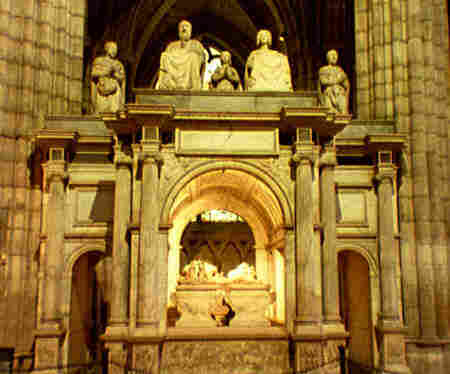
The first thing I noticed was the bare, marble feet. At the centre of the huge marble monument effigies of the almost naked monarch and consort lay, the soles of their feet facing tourists as they entered. At last I saw the human vulnerability of the monarchs. It was only later that I saw the fully-dressed king and queen kneeling in prayer, their children behind them, on the high top of the monument.

I wandered among the dead kings and queens. There was Marie Antoinette again, slightly larger than life and kneeling elegantly next to husband. And there were the plainer, earlier kings, from Clovis onward, looking stiff, still and much the same as one another.

Wandering among the royal monuments, I caught sight of a notice on one of the stiff mediaeval ladies: "une princesse inconnue" - an unknown princess. She may not have been a very significant princess but presumably, a long time ago, she thought herself an important person in the world. And now she was just a monument, much like all the others, and no-one even knew her name or which of the many dead princesses she was.

Beyond her lay another, smaller monument, no longer than a five-year-old but a miniaturised adult in polished white marble. I leant over to look at the notice - another "princesse inconnue."


Saturday, 25 April 2009

Ruskin was wrong


Ruskin's appalled words are quoted on notices and in guidebooks all over Monsal Dale. He was shocked at the coming of the railway:

"
There was a rocky valley between Buxton and Bakewell, once upon a time, divine as the vale of Tempe; you might have seen the gods there morning and evening, - Apollo and all the sweet Muses of the Light, walking in fair procession on the lawns of it, and to and fro among the pinnacles of its crags. You cared neither for gods nor grass, but for cash (which you did not know the way to get). You thought you could get it by what the Times calls 'Railroad Enterprise'. You enterprised a railroad through the valley, you blasted its rocks away, heaped thousands of tons of shale into its lovely stream. The valley is gone, and the gods with it; and now, every fool in Buxton can be at Bakewell in half-an-hour, and every fool in Bakewell at Buxton; which you think a lucrative process of exchange, you Fools everywhere!"

Now the main railway line is closed and regretted, though there is a steam railway offering recreational trips from Matlock (I haven't travelled in it for years.) If I want to reach the Peak District, I need the Transpeak bus which not only connects Buxton to Bakewell but Nottingham to Manchester. I don't expect Ruskin would approve of that either - and I find tarmac roads with traffic jams far less pleasant than rails and steam trains. For me they have the magic of antiquity.

When I think about it, I realise that the building of the railway in the Peak District must have created even more horror than today's extra runways and nuclear power stations. But Ruskin's account of the Peak District, which sees it as an untouched playground of the gods, misses an important aspect of the landscape.

When Ruskin wrote, the Peak District had been an industrial district for centuries. Before the railways there were canals and mills and mines. Land was ordered for agriculture and grazing; streams were diverted, woods planted and cut down, dry stone walls built. Nature was placed under strict control. The first tourists who saw the caverns saw the work of generations of miners, who hacked and scooped stony pathways and caves. Gradually the nineteenth century drew the inhabitants of the Peaks away from its green fields, hills and rivers to the manufacturing towns. But they returned at weekends to walk the paths they had made on familiar slopes and to clamber on the forbidden bleakness of Kinder Scout.

The walkers still take the bus towards Monsal. Last Saturday, my daughter decided to come with me. We took the bus to Ashford-in-the-Water, then climbed the hill to Monsal Head where we stopped for a pub lunch. Then we descended into Monsal Dale and the viaduct, which had looked so small from the heights, loomed above us. It seemed as much a part of the scene as the hills. One day I'll hire a bike and cycle on the viaduct - it's part of the Monsal Trail which offers a fairly flat route for pedestrians and cyclists who would otherwise be unable to explore the valley.

Our six-mile route was tougher. We balanced on rocks in a stream and scrambled through steep woodland. We came out into sunny fields and walked by rivers, canals and mills. Some walkers seemed surprised by my daughter's outfit as though her Barbie-pink university hoodie and matching pink-soled trainers were unsuitable in serious walking territory. But she made good process and was faster than me - and not just because I stopped every few minutes to take another photo.

Eventually grandeur gave way to cosy quaintness as we returned to Ashford to wait for the bus.

I keep looking at the photos from the walk and recalling the day as an encounter with nature and remoteness. But I depended on the bus to get me to Ashford and the focus of the most splendid views in Monsal Dale was the railway viaduct Ruskin so detested.

Monday, 20 April 2009

Chucking out time at the cemetery

Any sense of the dead remained stubbornly absent as I headed back to the main entrance of Pere Lachaise to meet my friends. They're younger than me: Vicky's 30 and Katie was a day short of 27. The sun and the imminent birthday celebration made for a cheerful mood as we strolled, climbed and clambered among the graves.

We consulted the plan together and tried to work out a route, negotiating between our favourite dead people.
We began by retreading the tourist trail to Jim Morrison, with a short detour to Heloise and Abelard. I was glad to glimpse Francis Poulenc on the way. Then we headed up towards Edith Piaf. I suppose the black marble, adorned with crucifix, bore some relationship to her life but I wanted something as rough and moving as her songs.

While our route was determined by the locations of some of Pere Lachaise's famous inhabitants, we were soon distracted by the delights of unexpected monuments. None of us knew who Andre Gill was but we were cheered by his bust with bright red chrysanthemum button-hole - not to mention a starfish laid before it. Katie, facing her advancing age with determination, decided to contemplate the possibilities of her own tomb, and decided that she too would have a fresh button-hole every day and that the duty of replacing the flower would be linked to a scholarship for poor postgraduates.

As we progressed, Katie's tomb designs grew more extravagant. She liked the bats carved into a metal door, art nouveau mosaics, the numerous mourning figures (almost always female). She wondered how to commemorate her books, her study and her shoes. Seeing a gigantic obelisk which towered over a family tomb vast enough to accommodate a living family on two storeys, she briefly hesitated over which to choose, then announced that she wanted both. "I won't have a tomb - I'll have a theme park," she declared. This added to our enthusiastic search for extravagant memorials.

Then Vicky admitted, when she was a child having dramatic tantrums, her parents had compared her to Sarah Bernhardt. Katie and I decided that we must find Sarah Bernhardt's tomb and photograph Vicky (in suitably dramatic pose) beside it. Unfortunately the "divine Sarah" was interred some way back from the path and her tomb was hard to photograph. Just as we'd readied our cameras and persuaded Vicky to adopt a suitable pose, a group arrived with their tour guide to trudge round the tomb. Vicky immediately abandoned her pose and the tour group prevented us from taking photos.

There was little gloom at Pere Lachaise. Jacob Epstein's huge, angular angel over Oscar Wilde's grave was a place of particular jollity and celebration. Oscar's last three years were spent as a bankrupt in Paris. I wondered what he would have made of the lipstick kisses on his tomb or the beaming male couple who posed hand-in-hand in front of it for a photo.

But at the top of the cemetery, as we neared the wall where the last Communards were shot, I stopped taking photos. This the part of the cemetery which reminds strollers of the past inhumanities. At first I hastened to see the spectacular sculptures but then I realised they commemorated the people who had been denounced, rounded up and deported to concentration and extermination camps. Underneath the romance of "abroad" there lies, almost always, the barbarism of the past which calls to mind the barbarism of today. I was shaken but wanted to recapture the holiday mood.

As we walked in the courtyard of the vast, domed crematorium, I tried to sweep aside thoughts of other crematorium chimneys and focus on the rows of little boxes in which ashes were stored. We found Stephane Grappelli and Georges Perec - but it was hard to see any relation between their brilliance and the simple inscriptions. By then it was past 5, and the cemetery was due to close at 6. We decided to make some last searches.

We saw Melies and then set out in search of Brunhoff, inspired by Katie's love of the Babar books. But the tomb, belonging to the Brunhoff family, was a disappointment. There were absolutely no elephants. We made our way back to the cemetery's main entrance.

It was 10 to 6 and chucking out time at the cemetery. An attendant sped past us on a motorbike, shouting at everyone to get out. The gardiens at the gates vigorously urged everyone to leave. We took their advice and headed out in search of a bar.


Friday, 17 April 2009

With the dead


I arrived early at the cemetery. I'd planned this in advance. I wanted to wander round alone.

I wasn't there to grieve but as a tourist. For years I'd planned to visit Pere Lachaise cemetery in Paris and I'd finally arranged to do so. I was going to wander round with two younger friends but it was a sunny day and I'd heard there was lots to see. I got there an hour before them.

Pere Lachaise is a tourist attraction but it's still used for new burials and cremations. Families who bought their plots in perpetuity, as attested by numbers on the monuments, continue to use them and my first walk took me past families tending graves and watering flowers. (There are taps provided where visitors can fill jugs.)

I had expected to experience gloom in Pere Lachaise - a sense of being surrounded by the dead. Homer calls them "the silent majority" but they didn't crowd in on me. The monuments, often like small houses with doors that could open or stand sternly locked, got in the way of the people they housed. The tomb of Heloise and Abelard - the first tourist attraction of Pere Lachaise, reuniting the lovers on a stone bed beneath a Gothic canopy - shows them so monumentally calm that it's hard to associate the peaceful figures with the messiness of their lives and emotions. I was pleased to see the tomb surrounded by scaffolding; that and the clustering tourists was the nearest I reached to an evocation of mediaeval Paris. It was a slight disappointment. I read Helen Waddell's novel about Abelard in my teens and moved on through her translations to enjoy mediaeval Latin poems - my classics teacher was distressed at my vulgar enjoyment of Latin poetry that rhymed.

I'd been told Pere Lachaise was big but hadn't realised quite how large it was. I thought I knew about large cemeteries having wandered through Highgate a few times as a child - my aunt lived nearby. I was glad I'd purchased a map showing the locations of the famous dead for 2 euros. This showed me that Jim Morrison was relatively near Heloise and Abelard so I walked in his direction, determined to get photos for my son, who sometimes wears a Doors T-shirt. It was easy enough to find the grave as sightseers - all younger than me - were crowded around, gazing at the simple polished inscription, the photos and bouquets. As I watched, one young man vaulted over the rail to get close to the grave. All at once, a uniformed French caretaker, who had been watching the scene, moved in to order him away. I realised that there were at least three guards on this grave - the only ones I saw anywhere in the cemetery before chucking-out time.

I waited my turn and got close enough to take my photos. Then I headed away in search of Chopin, whose tomb with numerous floral tributes, was next to the neglected splendours of Cherubini. Close to them both was a ginger cat, purring as he slept on a jacket. There were flowers around him too as well as bowls of water and cat biscuits. But I had little time to talk to the sleeping cat - it was time to walk back to the entrance to meet my friends.


Monday, 25 August 2008

Taking the tram


There's a point at which a new place ceases to be strange and foreign without becoming quite familiar. That's particularly true of places I love. There are places in Northumberland which I could explore with confidence. I might even swim in the North Sea off Bamburgh Beach without being particularly aware of the louring castle. I could direct a tourist to Grace Darling's grave or Barter Books in Alnwick, though it's years since I've been there. And, although I couldn't give directions, if I were in Edinburgh I would confidently find my way to the Grassmarket and negotiate the different levels, sloping streets and bridges.

I'm not quite so familiar with Paris, but I no longer feel exactly like a tourist. Going to the boulangerie remains a pleasure but the word "tabac" no longer produces a frisson of excitement. I haven't "done" all the tourist sites but I no longer feel so touristy that I need to do more. Instead of looking at galleries, I want to see exhibitions - Mantegna at the Louvre seems particularly tempting but probably not possible. Instead I want to absorb Parisien life. I may not be able to pass for a Frenchwoman, but I like to think I might become a temporary Parisienne.

I was restless and decided to spend an afternoon wandering. At Porte d'Italie I took the tram with no particular destination in mind. The Indispensible showed that there was an exhibition centre at Porte de Versailles so I decided I would get off there. Then I could walk or get a bus and perhaps head for the centre. One possibility seemed a Metro to Solferino and the Musee d'Orsay, but it was a little late and I wasn't sure I had the patience or concentration for art.

So far as I could tell, there were no tourists on the tram. I was the only passenger consulting a map. I gazed out of the window for places to visit on my return journey. The park at Cité Universitaire seemed a possibility. I admired the shiny exterior of the
stade Charléty, with its elegant curves, and briefly wondered whether to stay on the tram till the end of the line.

The tramway, circling central Paris, took me through areas of wealth, student quarters, places where people work hard for low wages and check the prices if everything they buy. I suppose people who ride the tram daily get used to those contrasts. I was being a tourist of everyday Paris and this struck me as much as the patience of people in queues and the tired helpfulness of drivers and shop assistants.

There was no exhibition at the Porte de Versailles. I hadn't expected one and headed in the direction of central Paris. I contemplated the Metro, which would take me quickly to the museums, the Ile de la Cite and the Seine, and decided to walk. I thought I might stop in a cafe for an espresso but many cafes were shut for the holiday season. Instead, I entered a Monoprix and browsed among the household implements before sitting down for a coffee. I lingered a while before walking further and devised plans involving buses towards the centre. Then I saw the bookshop.

I wasn't looking for books - and was trying to avoid stationery, which lures me into extravagance. But I stayed for a long while, buying a postcard, a book bag, a slim anthology of well-known French poems and a copy of Phedre. It took me back to a production by the Glasgow Citizens, some time in the 1980s - the last time I saw Glenda Jackson on the stage. But what I remember most is the voice of Robert Eddison outlining the tragedy and horror in the messenger's speech. That voice seemed to link back to the theatre of the past and conjured a link to the era of greasepaint, footlights and shattering emotion. No other voice in theatre has affected me quite so much, though Ralph Fiennes came close when he played Henry VI for the Royal Shakespeare Company.

I came out of the shop and emerged from my reflections to find it had rained. It was later than I'd intended - time to move on.

Instead of heading to the centre, I cut along another road, then another and bought olive bread in a boulangerie. Then I started to look at bus stops and found a route to connect with the tramway. (I was pleased with myself for remembering that a stop was called "George Brassens.")

Back on the tram, I had to stand. Two minutes after I boarded, the rain fell, torrentially, and I gave up my plan of walking in the park. Perhaps a beer at Porte d'Italie, I thought. But the rain continued and, when I left the tram, I was thankful that tram stops had places to shelter. I stood for a while, coatless, waiting for the rain to lessen, trying to be patient like a real Parisienne.

Thursday, 15 May 2008

Sunshine and history


The gatehouse is what tourists expect - or near enough. You can imagine Robin Hood lurking. There's a statue of him nearby but it's not how I imagine Robin - but then my imaginings were built by Errol Flynn and Richard Greene.

Robin wasn't much in my mind as I climbed the steep approach to Nottingham Castle - but he had to be there somewhere. There are leafy, green walks at the base of the Castle Rock, a steep hill and winding pathways, and even the major oak represented in a mosaic of pansies.

I wasn't meant to be in Nottingham. I was meant to be in a meeting - one of those necessary committees with long agendas and jargon-filled papers for discussion. I'd decided to work from home in the morning and allow myself an hour in the office with the preliminary paperwork. Just before mid-day I left for the station.

The trains I needed were cancelled - there was a signalling problem. Station staff promised a bus but it wouldn't get me to work in time for the meeting and it would be hard to get back again. I rang in with apologies.

I was about to go home when I realised that some trains were running and, if I waited a few minutes, I could go to Nottingham instead. I waited a few minutes. After all, I had work in my bag and could get some done while enjoying a cup of tea - or even the picnic lunch I'd planned to eat at my desk.

Once in Nottingham, I wasn't sure what I would do, but the day was warm and sunny and gradually my wanderings drew me towards the castle. I remembered a tea-room and free admission on week-days.

There's much discussion in Nottingham of the disappointment tourists experience on first seeing the castle. The fine mediaeval building of Robin Hood's day was destroyed after the Civil War when Charles I fought parliament, lost and was executed. The Civil War used to be one of the best known parts of British history. I grew up on stories of battling Cavaliers and Roundheads which were told much as 1066 and all That put it: that Roundheads were "Right but Repulsive" and Caveliers "Wrong but Wromantic." It seemed like a contest of hairstyles and costumes, until I came across an account and portait of the young John Milton, a dedicated anti-monarchist who didn't fit the Roundhead image. The English Civil War is largely forgotten now - many young people are surprised to learn that England was once a republic. However it marked Nottingham. The king chose Nottingham Castle to raise his standard in 1642. I'm not sure why he chose Nottingham which became a parliamentary stronghold during the war - the castle was held for parliament and later used as a prison. In the end it was demolished, for fear royalists would attack and hold it. The site must have made it one of the most powerful fortresses in the country.

In the 1670s, after the Restoration of Charles II, the site was leased by the Royalist William Cavendish, first Duke of Nottingham, whose son built a small mansion on top of the rock. The poor lived and drank below, not just in houses but in man-made caves. Nottingham's caves were officially inhabited until the beginning of the twentieth century. Unofficially, people were living there a few years ago. Maybe they still are.

I wonder what the Cavendishes thought when they looked down on the poor, or if they spent much time in Nottingham. In 1831, the Duke of Newcastle opposed the Great Reform Bill, which proposed extending votes to the middle classes and providing parliamentary representation for the new industrial areas. The Bill was intended to undermine aristocratic patronage and the aristocracy objected. When the House of Lords threw out the Bill, which had been passed by parliament, there were riots in Nottingham and the Duke's castle was burnt down. The Duke left the burnt-out wreck as a reminder to the people of Nottingham.

The mansion was rebuilt in the 1870s and taken over by the local council, who used it to create the first municipal art gallery outside London. The castle is still owned by the local council. It's not one of the best municipal galleries but I always find something there to delight me. Every so often a campaign springs up to demolish the current castle and replace it with a Disneyfied tourist attraction but I would hate that. The current building may not be exciting but I'd rather not unpick 400 years of history. "City of legend" is a fine marketing slogan but there's more to Nottingham than that.

Yesterday, however, I was set on tea and a picnic. I drank Earl Grey while working, then moved to a bench on the terrace for my picnic and more work. There was a breeze. I could see the sails of Green's Mill turning. Beyond the houses, churches and office buildings there were high, sunlit fields. For an hour or so, this was my workplace.

Then I walked down the steep path through the trees to the memorial to Captain Albert Ball, V.C., a fighter pilot killed in World War I. It's a strange memorial showing the young airman with a female figure flying beside him - a Victory, perhaps. From some angles their cheeks seem to be touching. I don't suppose Albert Ball had much opportunity to be close to women. He was only 20 when he died.