Showing posts with label travel. Show all posts

Monday, 4 April 2011

The Harrods of the ancient world


How could something so fragile last so long?

I gazed at the remains of brittle gold bowls and goblets. I could see where the stem of the goblet should be. The amazing thing is not that it has vanished but the thin, ridged bowl should have survived. I peered closer to make out the outlines of bulls on part of a bowl. A craftsman scored them gently into the gold around four thousand years ago. They are evidence of a vanished civilization of which little else is known. They come from Afghanistan.


I was hesitant about visiting the Afghan Treasures exhibition at the British Museum. I thought uncomfortably of conquerors, loot and triumphal processions. Exhibitions often arrive with an agenda, especially when they have been negotiated by diplomats. But this exhibition seems to have a gentler and more laudable cause. The British Museum has been restoring ivories that were stolen in the looting of Kabul Museum and recovered by an unnamed philanthropists. The British Museum staff have been working with the staff of Kabul Museum and the exhibition, however dependent on diplomatic goodwill and corporate sponsors, comes out of their joint work. The exhibition tells another story too – of museum staff who hid the treasures so that the history of their country could be preserved.


The history of Afghanistan is not well known. There is much that has not yet been recovered or understood. Western history books have tended to simplify the region as a place of romantic barbarism which briefly encountered civilization with the arrival of Alexander the Great. Alexander the Great, who married an Afghan wife and adopted local customs, may have viewed it differently.


So far as I can gather and recollect, the region had two reasons for importance in the world. It was a source of lapis lazuli, which was rare and much in demand. And although its terrain is difficult by contemporary vehicles, it stood on major trade routes, bordering India, China and the Persian Empire. Traders went as far as Greece and Rome, although the journey each way would have taken a year. The treasures they brought back, particularly to Begram, are protected in glass cases in the exhibition.


Captions show the uncertainty of the curators about the exhibits on view. There is a head of Silenus, clearly recognizable, but did the Afghans really know who Silenus was? Its unclear whether the owners of valuable items purchased deities or just attractive statues – rather as a modern mantlepiece may bear statues of Ganesh or the Buddha without necessarily demonstrating any religious allegiance or knowledge.


There's glass, too – Roman glass most probably or perhaps made in Egypt - the curators cannot be sure how it reached Begram from Rome since the way was blocked by war with Parthia. One piece is enamelled with full-length figures which even I can see are Roman in style. Another's delicately ornamented with vines made from the glass itself. But beside these are statues carved in turned ivory – chair-legs, the inscription suggests – each with a swaying female figure in what seems to me an Indian style. There are glass fish, a face that resembles a Greek or Chinese theatrical mask. There are Corinthian columns and finials. Some items must have been made in Afghanistan by craftsmen who had learnt skills from crafts practised elsewhere. But many items are imports, suggesting a place like Britain today where beautiful objects from all over the world can be prized and owned.


Half-way round the exhibition, I realised something else that was troubling me, though it's not unusual. I had little sense of the lives of the people who owned these objects, other than that they were very rich and could afford goods imported from far-off places. It was as if, one day far in the future, someone were to excavate Harrods and, finding only a few of the goods on show, tried to understand life today on that basis. Perhaps that is what has survived. Perhaps these expensive, traded goods represent the Harrods of the ancient world.


As I wandered through the exhibition, the past seemed both more distant and more familiar. I couldn't grasp past Afghan cultures but then, if asked, I couldn't give a simple account that took in the whole of west European culture today. Artefacts left by Afghan trading centres, which drew goods and influence from across the world, speak of a complex, varied society. This shouldn't be surprising or unusual. But I began to realise that many exhibitions treat the past as a collection of small, separate societies. They don't just assume that societies are culturally pure – they often treat cultural purity as something good in itself. The textbooks I studied at school were wary of cultural mixing. Rome's interest in things Greek was regarded with disdain although the Renaissance interest in Greek art and sculpture was excused as a means of regaining artistic purity after the confused muddle of the Middle Ages.


Looking at the wide range of objects on display and marvelling at their variety, I realised how much ancient history has been filtered through subjective and questionable value judgements. I suppose curators have to simplify – just as their displays provide the kind of neat, comforting pattern humans are trained to prefer. But in real life I like variety and complexity – and am glad that human existence resists a neatly moral narrative arc.


At last I neared the object I recognized from the posters for the exhibition: the gold crown once worn, so the captions assured me, by a nomad princess. I expected something bright and golden but I hadn't realised the tiny golden discs would tremble continuously, as though there were a breeze or breath inside the glass case. I read that the crown could be packed away and folded – and that all the nomad treasures, buried two thousand years ago, could be carried easily on horseback. In my imagination an Afghan princess rode through wild landscapes, the trembling crown on her head and a gold-studded cloak behind her. It's an improbable fantasy. I have no idea what the concept “princess” means in terms of nomadic people two thousand years ago - I wonder if the women were princesses in any way we can understand.


Little seems to be known of Afghan nomadic life beyond the six graves in Tilya Tepe. But the adornments found in the tombs of five women and one man link the items closely to the humans who wore them. It's not just the photos showing how the bodies lay when the tombs were opened or the glass case where the golden items mark out the shape of a human form. It's more to do with the sense that these items once touched living flesh and the the gold was caught on wisps of cloth the tombs were found. I peered as directed to see that the bracelets show signs of wear – in contact with an arm over time, gold diminishes.


The exhibition isn't big or cheap (I got in for half price – £5 – with my Art Fund membership). Space inside is limited because items are small and, when I visited on Saturday, that meant queuing briefly before reaching most cabinets. I haven't carried away a neat package of knowledge about an obscure culture. Instead I have grounds for wonder and wondering – more than enough.


Friday, 25 February 2011

Imagined journeys


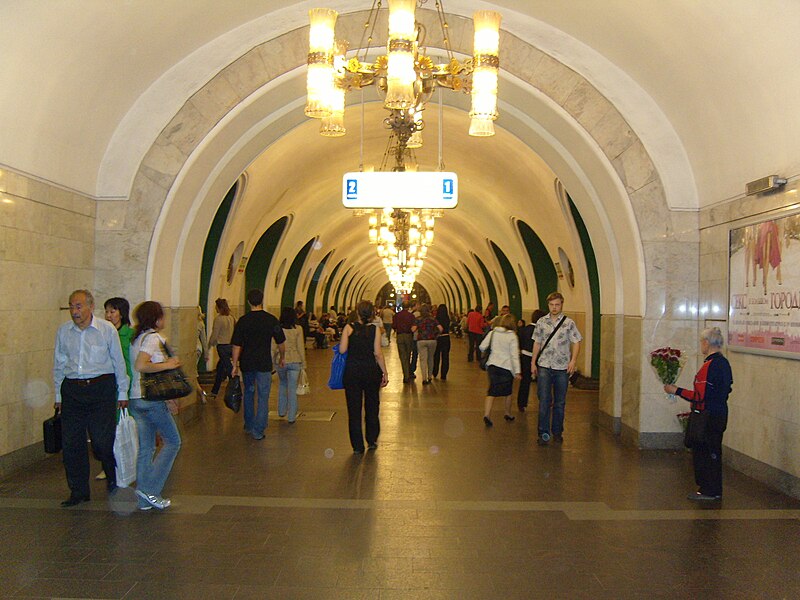
I'm not really about to travel on the trans-Siberian railway - or even on the Moscow metro. But when I attend my weekly Russian class, the tutor assumes we will all go to Russia one day.

She seems rather worried about this, especially as most of us fail to make the rapid progress she would like. My studies are hampered by my failure to find sufficient time for homework and my inability to pronounce words with long strings of consonants.

I've spent some time this evening writing out numbers, days and months in my neatest Russian script in the hope that I'll start to remember them. But somehow they fail to lodge properly in my brain. I really need 20 or 30 minutes a night on Russian to make any progress - an hour or so at the weekend, when lucky, doesn't have the same effect. So when the next lesson comes round, I'll feel like a dunce again.

But when I look back, I have made some small progress. I no longer struggle with Cyrillic script and have acquired a few useful phrases: I can say извините (excuse me) я не знаю (I don't know) and employ the useful word можно (our tutor's very keen on можно) which means something like "May I ...?" and can be used in a variety of situations.

At times we enact situations. Some are guided by the text book while others are invented by the tutor. The text book has a fine sense of exotic scenarios. I particularly enjoyed the conversation between the delegates to a conference for amateur accordianists, who enthusiastically introduced themselves to one another, giving details of their nationality and job - in Russian of course.

Then there was the keen but inexpert student of Russian (always asking Russian friends to speak slowly until they pronounced the words one careful syllable at a time). His evident lack of competence didn't stop him heading for a large bookshop (дом книги) where he asked the assistant for the book of his choice - not a simple reader or a Chekhov short story but Tolstoy's Anna Karenina. Later he set out to buy a balalaika as well - there's an enthusiasm for music running through the text book.

But we move away from the book to practise other scenarios. We have arrived at customs and are interrogated by an official who demands to see passport and visa, asks questions about nationality and profession and which bag belongs to which traveller. We buy tickets for the train at the main rail station (a word derived from Vauxhall, after the much-admired London station), and enquire about train times (numbers again). We learn how to navigate the metro in Moscow or Novosibirsk.

But again our tutor is anxious. "Don't go to Russia alone. You should go in a group or with a guide - unless you know Russian people." She's worried we'll be mugged or cheated - that we won't be able to cope with crowds or pickpockets. She also warns us about the high prices in Moscow and the risk of taking an unlicensed taxi. At the same time she wants us to understand that Russian people are hospitable and good friends who will, when we know them, welcome us into their homes.

I suspect she would be a little less worried were we more competent in the language. I would worry about any friend who arrived in London alone with little English and attempted to navigate the city. But the language, while fascinating, remains strange.

Of course, it's the strangeness that attracts me. I've reached the stage where I can notice the way Russian words have different boundaries to English words. For instance, there are different words for going somewhere on foot and going somewhere in a vehicle. There are other oddities. Numbers ending in 2-4 take the genitive singular while higher numbers that don't end in 2-4 take the genitive plural. And the sane word means both "world" and "peace".

That, for me, is one of the most exciting things about learning a language. As I discover the different concepts that are taken for granted in other languages, I feel my mind expanding to accommodate additional possibilities. At the same time, certainties I'd taken for granted become unstable. It's worth struggling with the numbers and the strings of consonants for that alone.

Of course, I'd rather become so expert that I could read Pushkin or Akhmatova in the original. It doesn't seem likely. Next week we learn how to book hotel rooms. I expect we'll be asking questions about bedding, showers and when breakfast is served. It's not quite the vocabulary of Eugene Onegin.

I don't suppose I'll even get to Moscow either, so I shan't use my expert knowledge on travelling by Metro or booking a hard or soft seat to Novosibirsk. I'd rather like to cross Russia alone, for all my tutor's anxieties. Perhaps, if I did, I'd find myself managing the language a little better.

But that's enough reflection. It's time to return to my Russian homework. I have to work out how to buy a samovar and some Russian chocolate. I might buy a bottle of vodka as well and a few postcards - or even a large, red piano. It doesn't really matter what I buy since I won't really be paying for it or bringing it home.

Thursday, 7 October 2010

No to the Kindle

British friends have occasionally asked me why I visit Paris in August. “There's no-one there,” they assure me. “The real Parisiens are all on holiday and everything's shut.”

It's a simplification. Some Parisiens – those who can afford it – try to take holidays in August. Some shops, businesses – even museums – are closed. Last year I was sorry to miss the municipal museum of Montreuil, which I still hope to visit one day. The Comedie Francaise and the Paris Opera are on holiday. Friends I would have liked to see were away – as was the owner of the splendid apartment I sublet.


Yet I enjoy Paris in August. It has a leisurely air. The discovery that a local shop or restaurant is shut for “les vacances” is not a disaster. It's a reminder that workers need holidays and there's more to life than making money.


In previous Augusts I did little to look for live events in Paris. Paris Plage was fun – and full of locals – but I missed it by a day this year. I wondered if my British friends were right in saying nothing else was on. I decided to investigate. I paused at a kiosk and invested in a copy of Pariscope – not a huge gamble at 40 eurocents – to see what was going on.
Leafing through the pages I read of theatres, cinemas, concerts, spectacles and markets.

At first I was baffled by the choice, then began to make decisions. The Lucernaire looked worth a visit, and quite near where I was staying. The second and third Millennium films were showing at the Cinema Chaplin, not too far away. There was a fund-raising piano festival at the Armenian Cathedral in the Marais – and much more.


I began at the Lucernaire. The list of theatre shows made me hesitate. I'd missed Cooking with Elvis at the local amateur theatre and was prepared to miss the French version as well. But I wondered about a one-man show of Oscar Wilde's De Profundis, well-reviewed in a number of French national papers. The price – 22 euros – is more than I usually pay for theatre tickets. But when I thought about seeing Wilde in French, there was a pleasant logic too it.
De Profundis is Wilde's long letter to his young lover, Lord Alfred Douglas, written from Reading Gaol. Some years ago I would have said I knew the English text reasonably well, although it has faded in my mind since. I recalled that, after leaving prison, Wilde went to Paris, where he died, and was buried in Pere Lachaise cemetery. And while I hesitated about seeing a work in translation, I recalled that I had twice seen Wilde's play Salomé, which he wrote in French for Sarah Bernhardt, in the translation by Lord Alfred Douglas. The idea of Wilde in French translation was almost symmetrical. I bought my ticket.

The set up at the Lucernaire wasn't quite like a theatre in England. Notices on the wall told us that the “ouvrieuses” (specifically female workers) showing us to our seats were unpaid and dependent on tips. The ouvrieuses were charming and had a neat way of sliding the proffered tips into a purse – but I felt uncomfortable about the procedure. Workers are often required to display charm as part of their jobs but I didn't want to measure and reward that charm directly with a tip – it felt too intimate a purchase. However as they were, according to the notices, dependent on the audience's generosity, it was plain that generosity was my responsibility. I handed over the tip as I was shown to my seat and wondered if I'd bought the bright smile that followed.


The theatre was small – a studio space without the formal grandeur of a proscenium arch. The actor playing Wilde was already on the stage, perched on a step-ladder and half-covered by a blanket. The audience leaned forward expectantly, displaying a quality of intense concentration that is rare in English theatre audiences – and this continued throughout the performance.


Occasionally I found the use of French distancing and at times my understanding flickered out - I probably grasped 80 to 85% of the text. Despite the strangeness, a French Wilde seemed a convincing possibility. I even found his mispronunciation of Reading (to resemble the activity rather than the town ir the gaol – endearing).
It was an intense and moving performance. I was surprised to find that, towards the end, I felt sympathy not just for Wilde but also for Lord Alfred Douglas – Bosie. De Profundis chronicles instances of Bosie's selfishness but, listed by Wilde, they seem like the follies of a very young man faced by an adoration he could not quite reciprocate and an intelligence he could not match. Even his cruel statements seemed like a dull attempt to match Wilde's wit while his neglect of Wilde's feelings could be forgiven as the uncertainty of a young man suffering from an appalling upbringing and unsure how to respond across the barriers of age and c lass. The young often do run from suffering – and how was Bosie to respond to Wilde's imprisonment and agony? Biographies suggest that Bosie was unpleasant throughout his long life but the pictures reveal a startling beauty which may also have been a disadvantage.

A week was not enough for all the events listed in Pariscope. I saw Millennium 2 – subtitled in French, which I find far easier than dubbing – and enjoyed a riveting performance of piano music by Chopin and Rachmaninov. That was as much cultural performance as I could take. I also haunted the bookshops, trying to add to my small collection of books in French.


There were two books I aimed to buy: Victor Hugo's Notre Dame de Paris and Eugene Sue's Les Mysteres de Paris. Both have been on my list of books I need to read for some time. But I was confronted by something unfamiliar from my life in the East Midlands – a wealth of bookshops. There were big shops like the many branches of Gibert Joseph in the Boul' Mich and the art chain Mona Lisait. Then there were many small independent shops – far more than in London, I think – where the stock seemed to reflect either the manager's taste or the surprises that often delight and infuriate in secondhand volumes.

I browsed contentedly and puzzled over what to buy.
I find nineteenth century French literature easier to read than modern light fiction; lengthy paragraphs allow unfamiliar words to become clear from the context and puzzles can be resolved with the aid of a dictionary. Recent thrillers, for all their popular appeal, are harder because they use so much contemporary slang. I have a further interest. I've noticed that, for generations, working-class readers in particular were absorbed by popular French fiction from the mid-19th century. Stories like The Count of Monte Cristo and Les Miserables are mentioned in working-class writing from the 1850s to the 1950s. And I knew that writers for the working class drew on French writers. For instance, G.W.M. Reynolds' terrific and popular serial, The Mysteries of London – which makes Dickens seem restrained in style and detail – was directly influenced by Sue's Mysteries of Paris. So far as I can see, no-one has gone into much detail chronicling this influence. While the effort necessary for a wide-ranging survey is beyond me – I imagine I'd need a year or so in French archives with no guarantee of success as well as another year combing comparable English publications - I could at least see what popular fiction of the period was available in paperback.

One of the joys of reading in French is the vast and largely unknown library of possible titles which spreads before me. Looking at Paul Feval's Le Bossu – which was the source for a couple of terrific swashbuckling films - I discovered that the same author had written his own Mysteres de Londres – quite different from Reynolds' serial. I haven't read it yet but, according to the back of the book jacket, it tells the story of an Irish plot against the British government and is set in exotically English locations. I had to buy a copy. There was a fine multi-volume edition of Les Mysteres de Paris, with illustrations, but in the end I concluded that it was too heavy.

I was also tempted by Eugene Sue's last book, Les Mysteres du Peuple, apparently a fictional account of working-class revolution from the time of Jesus to the era of Napoleon III. I wondered why so startling a book was so little known. Until I stumbled across a copy in Gibert Joseph, I hadn't heard of its existence. I nearly bought it but once again I hesitated, feeling the weight of the book. I could delay, I thought, and order it from amazon.fr when I had time to read it.


In the end, I succumbed to ten or twelve books, including a fine hardback edition of Notre Dame de Paris from one of the second hand shops set up by Abbé Pierre's Emmaus charity. A friend tipped me off that these were a great place for bargains and the shop I visited gave me an excuse for travel on the voguéo - I find it hard to resist river travel. My reading of French is still slow and I have less free time than I would like so my purchases will last me a long time. But I still regret the two books by Sue – perhaps I need to go to Paris again, very soon.


The chief problem was one of space – and what I reckoned I could carry home in my suitcase. Eurostar may not have a weight allowance but travellers still have to heave their cases onto the conveyor belt for scanning and manoeuvre them into the luggage areas of trains.


Briefly I thought of the solution suggested by a couple of friends: if I purchased a kindle or e-reader I could carry a whole library with me, unworried by weight. But I like the weight of books. I like the smell and texture of paper, the designs of covers. I like turning the pages with my fingers. I love the sensation of opening a new book for the first time – and I adore books with history, which carry a sense of their past readers. I can see the logic of an electronic reader but not the pleasure.


Nor would there be opportunities for communication. I discovered the novels of Michael Chabon after seeing a taxi driver was reading one. It was the beginning of a good conversation about books, which would never have been sparked by the anonymous cover of an e-reader. I like seeing what my fellow travellers are reading.


Then think of the hazards. I couldn't read an e-book in the bath – at least not safely. Amazon has been known to withdraw a text from the kindle, regardless of readers who were half-way through. An equipment failure or expired battery could put an entire library beyond my reach.

My books may occupy too much space. It's also true I don't always know where a particular title is. But I know my books by their shape, size, colours and texture. I could never gain so much affection for an electronic index.
Perhaps this simply marks me as a member of a dying generation, to be as much pitied or mocked as those who could not adjust from the scroll to the book. Wandering through the market of old and antique books in the Parc Georges Brassens (on the site of a former abattoir), I was unable to imagine surrendering my love for the book in favour of a screen called into grey and white life at the flick of a button.

Mind you, I didn't buy any of the book on sale in the Parc George Brassens. It was the last day of my holiday – and another book would have made my suitcase too heavy.

Saturday, 27 February 2010

Shopping and space


I bribed myself to go shopping. If I forced myself into clothes shops, tried on jeans and actually purchased a pair, I would allow myself to revisit Nottingham Contemporary's current exhibition, Star City: The Future under Communism.

Even with the bribe, it was difficult. However I suddenly found two pairs of trousers that would do. My mood lightened as I climbed the short hill to the gallery.

It wasn't my first visit to Star City. I popped in on Light Night, the very first day it was opening, but didn't stay long. I wanted a range of Light Night experiences - and found them in the jitterbugging skeletons, a candlelit church, a free Schumann recital, giant insects in the castle grounds and fencers in the Long Gallery of the castle itself. Most of the Light Night events were for one night only. I knew I could return to Nottingham Contemporary.

The exhibition itself is a puzzle. Perhaps this is as it should be since many people of my generation and older are puzzled by their own reaction to the loss of the Soviet Union and the fall of the Berlin wall. We knew a great deal was wrong with the Soviet Union - I grew up aware of the show trials, the events in Hungary and saw the first black-and-white footage of Soviet tanks arriving in Prague. I haven't forgotten the name of Jan Palach.

Yet while the the smart-suited bureaucrats and party officials made speeches that betrayed their followers' ideals and their own lack of conviction, there seemed to be another Soviet Union composed of the dreams of many who wanted a different, better life. Those dreams - of comradeship, freedom from want, real involvement in the government of a country, hope for the future - still seem worth preserving. I don't believe that I live in the best system there will ever be, nor that freedom to shop is a major test of liberty.

A couple of the more recent works at the gallery seemed to equate consumerism with democracy. I wasn't sure what point Diango Hernandez was making by using elderly kitchen appliances to vibrate to a speech by Castro in morse code. I had a slight suspicion that my reaction - "I like the look of that blender" - wasn't quite what the artist hoped. But other exhibits let me remember and reflect.

The Soviet posters of the space age recalled the excitement I felt on hearing that Yuri Gagarin had become the first man in space and the thrill in learning just two years later that a woman, Valentina Tereshkova, had also become an astronaut. I didn't particularly want to travel in space when I grew up but I liked the sense that it was possible. The posters had the bright excitement of Janet and John books or Sunday school displays, infused with the glamour of space and Cyrillic script.

It was disappointing, therefore, to find that the Light Night opening featured two pretend Soviet astronauts at the entrance to the gallery. They played at space walks, called everyone "comrade" with exaggerated accents and treated the whole thing as a grand joke, as though going into space was nothing and seeking comradeship an absurd archaism. I wasn't angry but something inside me was hurt. Perhaps I still cherish a lost dream after all.

Elsewhere the exhibition was more complex and harder to put in words. I was reminded of Leon Rosselson's song "Wo sind die Elefanten?" which can convey its sense of loss only through an absurd sentence from a German language course. The gallery had several huge exhibits but I spent most time with a series of small illustrations by Ilya Kabakov, produced in the late Soviet era and called "The Flying Komarov." These pictures, which started in a cupboard and moved on to a world in which most people flew, seem to speak of hope for liberty and the importance of dreams. They allow space for the viewer too - not outer space but inner space to interpret and question.

I haven't given Star City all the time it needs. I'll be there again, wondering what to make of it all. I can drop in again and again - that's the benefit of a free gallery.

I'll go on thinking of the dreams we build about other countries and our own. It's not the dreams that are wrong. But across the world there are leaders and would-be leaders who twist those dreams to a hateful shape for the sake of riches and power.

Saturday, 5 September 2009

Loving Paris


Arriving at the Gare du Nord, I was equipped with the carnet ticket that would take me to Montreuil. I like to keep fresh carnet tickets in my purse, telling myself that I have the tickets ready and therefore I must be back in Paris soon. I keep old tickets and use them as bookmarks so that every so often, when I pause in my reading, I'm reminded of journeys in the city I love.

This time I was over-confident. I didn't read the sign telling travellers to push their cases ahead of them. Instead I walked through the automatic gates pulling my suitcase behind me. They closed sharply and my case was trapped.

I was, of course, embarrassed. But a fellow-traveller, seeing my hopeless efforts to tug my case free, came to assist and quickly solved the problem. "You need a navigo," she told me (in French) and started asking other travellers whether they could help me by loaning one. Within a couple of minutes a young man realised what would work and laid his navigo on the panel that would recognize him as a legal traveller. The gates sprang open to admit him, the woman pushed my case through and went on when I'd hardly finishe stuttering my thanks.

It's hard to manage on the metro with a heavy case. The lines must have been built separately so the connections between them involve long tunnels, steep staircases and only occasional escalators or lifts. Sometimes I struggled alone but quite often people came to my help - smartly-dressed young people insisted on helping and so did one of the vendors of cheap toys and fluorescent Eiffel towers who left his pitch in the tunnel to run up a flight of stairs and help with my case.

Even with the help, my feet ached from the journey. Somehow they acquired small cuts and blisters which made walking difficult for the first part of the week. Perhaps the pain in my feet combined with my distaste for Versailles to make me less sympathetic than usual to the momuments to the French Republic.

I can't love the Panthéon. It's fine from the outside and when I stook in rue Soufflot under a dark grey sky with thunder crashing and lightning streaking across the sky the building came into its own. But the vast interior with its huge sculptural representation of the Convention doesn't grip me as much as the colourful Gothic delights of the much smaller Sainte Chapelle. Nor do I enjoy the collection of great men in the crypt (one woman is honoured there - Marie Curie was added in 1995). There are aspects to enjoy. I was amused by notices explaining how several people initially honoured at the Panthéon had later been demoted and buried elsewhere - even in death, it seems, the great men and their supporters were jostling for distinction. But it was good to see a memorial to Toussaint l'Ouverture and I could remember watching part of the ceremony in which the elder Alexandre Dumas was finally moved there in 2002. But it's part of the assertion of national greatness on a monumental scale which fails to touch me. In the same way, when I look at the Arc du Triomphe, so vast on its traffic island that it diminishes its visitors into insignificance, I feel regret rather than admiration.

Among all this neo-classical monumentalism, the Eiffel Tower is striking because it's so plainly linked to a people's Paris. It's a work of craft as well as art - whenever I see it I think of the skill with which it was designed and the hard work which created it. I've been to the top of the Eiffel Tower only once, when my son urged me to conquer my fear of heights. (That fear left me a year or so later but I faced my fear and got to the top - I still have the ticket to remind me.) But there's nothing intimidating about the Tower - it doesn't celebrate great men or the power of kings or state but human achievement in a city.

My favourite places aren't the great Haussmann boulevards, so convenient for crowds or armies and tanks. I like the small streets like the rue Mouffetard where people wander and work and shop and worry. I like places where the workers of Paris sit and talk at café tables the moment there's the faintest gleam of sun. I enjoy the everyday life of the city which can be rough as any city but which also has space for casual kindness. I'll remember all the sightseeing from my visit - and there's much I haven't mentioned here. But I'll also remember a comfortable basement cinema where the staff made viewers welcome, a hospitable African shop in Montreuil which serves - for 1 euro - the best espresso I've experienced in Paris, and a friendly Belgian pub near the Panthéon where happy hour starts at 4.00 p.m. so that draught Leffe arrives in double quantities.

Thursday, 6 August 2009

"single blessedness"

I was early for the train so I browsed among the leaflets and timetables. Special offers for train travellers attracted me, especially since the illustrations showed attractions in the southern Peak District that I hadn't visited for years, if at all.

I picked up the leaflet hopefully and began to read. One offer was free child admission with a full-paying adult. That sort of offer used to be helpful but not any more. Almost all the remaining offers were "2 for 1" admission charges. Only one offered a discount for the single traveller.

Once again, I find an assumption that everyone moves around in couples. It's not just the train companies that think this way. I've been browsing holiday websites - more in hope than with any confidence that I'll manage an exciting holiday next year. There are some good headline prices. I even thought, briefly, that I might manage the trip to Iceland I've been dreaming about since my schooldays. But the prices come with the usual footnote "Prices are based on two adults sharing a room."

I can see that single travellers cost hoteliers more than couples. But why can't holiday companies just say what the single room supplement is? Too many ask single travellers to phone in - suggesting that singleness is a bizarre state - while some holidays, offering plenty of space for couples, say that nothing is available as soon as I enter information about my solitary state. Prices rocket out of my range when I confirm that I need a room of my own - and I'm not broke.

Why can't companies cater for single people? There's nothing wrong with travelling alone - lots of people do it. Solitude has advantages although it requires some toughness and self-reliance. Almost everyone is single at some point. Single people like holidays and days out just as much as couples.
In some cases - for example when people are newly widowed - this attitude must be intensely hurtful.

Why make us feel like oddities or burdens?