I decided to give myself an Easter treat. Having found suitable eggs for my parents, who like milk chocolate; my son, who is a vegan and my daughter, who doesn't like chocolate very much, it seemed time to give myself a present. I determined on an Easter Day trip to the cinema and resolutely ignored the demands of house, garden and work.My first idea was to see the film Oranges and Sunshine by Jim Loach. I still hope to see that some time. The scandal of children shipped from Britain to Australia, where many were abused and exploited, has particular resonance in the East Midlands, where the story was first brought to public attention. Jim Loach's film, which tells that story, is well-cast and has received excellent reviews. But I wasn't sure I wanted to be distressed on Easter Sunday, which is supposed to be a day of rejoicing.A glimpse of a good review turned my attention to Wim Wenders' film, Pina. My daughter studied Pina Bausch's work at university and her views shifted from mild dislike to enthusiastic appreciation. It isn't easy to shift my daughter's views and I thought I would like to learn more about the choreographer who achieved that. While dance isn't one of my greatest interests, every so often a dance work does excite me and Pina Bausch, who used the term Tanztheater (dance-theatre) for her work, seemed the kind of creator who would at least be interesting. And when I heard of Wim Wenders' enthusiasm for 3D, my choice was settled.I've never taken 3D cinema seriously before. I've enjoyed a couple of 3D cinema experiences – at least, I think I have – but while they were probably exciting at the time they had the quality of theme-park rides: intense at the time but ultimately unmemorable. Yet 3D is a logical development of cinema which includes the stereoscope among its origins.I like stereoscopes. I've peered through them in museums and seen two similar, apparently-faded sepia prints spring into something resembling solidity. They recapture an unalterable past and give it a brief air of tangibility. The images shimmer into solidity before my uncertain gaze. I wasn't sure how 3D would work for dance but it seemed an appropriately elegaic mode for this subject – Pina Bausch died just as Wenders was starting work on a film about her.The film Wenders has made is an elegy. Dancers' words recalling Pina are heard as they gaze silently into camera. There are also clips which show Pina dancing. These are, of course, in 2D but the stereoscopic effect is achieved by the use of an on-screen audience, reminding us that what we watch belongs to the past and cannot be recreated. The inclusion of 2D footage also has the effect of ensuring that the 3D effects remain vivid and startling – the brain isn't allowed to become acclimatised to the novelty of the experience.I'm not sure I understand Pina Bausch's work. Even if I did, it resists being put into words. As she says during the film (so far as I can recollect), dance is an ideal medium for things which can be hinted but not spoken directly. Once I start describing what the dancers do and how they move, I know I'm diminishing their work. More than for most art-forms, the meaning of dance is unsayable.Moreover the dances Pina Bausch created work, like most dance, by repetition of movement. A sequence which is initially startling – often because of the skill employed by the dancers – ceases to astonish and appeals to the emotions as it is performed again and again. My brain can't unscramble the effects but I can feel them.At times, of course, my concentration flagged. Sometimes all I saw were the startling 3D effects as dancers moved towards me and away. That may have been because I was tired, because I'm insufficiently familiar with the vocabulary of dance or even because Wim Wenders is not yet sufficiently in command of 3D cinema and its effects. But my interest never fell away and I emerged from the darkened cinema feeling that I'd seen something that isn't usually available away from the screen.“After all,” I reflected on the train home, “3D is never quite so intensive and exciting in the real world. The 3D of reality is flatter than that.” And then, when I left the station, I looked up and was suddenly aware of distance – between sky, houses, trees, road and lamp-posts. It seems that the film has re-educated my brain. The world I see now has sprung back into its real, 3D perspective.
 I took another look at the peace-camp on Saturday. It's been shifted to the pavement in Parliament Square while the grass, which London mayor Boris Johnson said he wanted to preserve for the people of London, is closed off with tall fences and patrolled by security guards.
The peace-campers' tents are neat and there's plenty of space for pedestrians on the pavement. I was one of many people visiting to read the banners. But it's still hard to reach the traffic island – I've yet to find a set of traffic lights that enable the public to reach the island. I had to employ my usual technique of a quick dash as the third lane of traffic slowed.
I suspect there will be an attempt, on some pretext or other, to remove the peace-campers before Friday's Royal Wedding, even though they offer no more risk than a fairly quiet protest on a range of issues, most – but not all – related to war. One man's banners announce that he is undertaking a hunger strike because he has been unjustly imprisoned. If he were in Tripoli the British press would probably declare him a hero. As it was, none of the campers even offered me a leaflet. I read their hand-made banners without interruption. Theirs is a quiet, enduring protest.If the peace-camp is cleared, it will make the streets more home-like and welcoming for the despots and their representatives who are attending Prince William's wedding. The Crown Prince of Bahrain has finally pulled out, citing troubles at home – these could include the brutality his own and Saudi troops are showing to unarmed demonstrators and the doctors who treat them. But London and the Royal Family will still welcome representatives of Saudi Arabia, Zimbabwe and Swaziland.
Looking at summaries of the Guantanamo files, I can't help thinking that these tyrants have much in common with our other allies – and perhaps with our own, more secretive activities elsewhere in the world. Apparently the United States military didn't just take people to Guantanamo because they thought they were terrorists. They also kidnapped and imprisoned people who they thought might have useful information. A taxi-driver, for instance, was reckoned to have good knowledge of a particular region because his work took him through it. One man – a British citizen – was held because he had been imprisoned by the Taliban and was therefore likely to have good knowledge of their interrogation techniques. A 14-year-old who had been kidnapped and was known to be innocent of all terrorist activities was kidnapped again – this time by the Americans – because he might have knowledge of the Taliban and local leaders.
As for evidence of terrorist activities – the U.S. military didn't need much ground for arrest, deportation and torture. Visiting Afghanistan after 9/11 was enough. So was possession of a Casio watch, although the models the U.S. found suspicious are cheap and widely available.
I expect the United States ambassador will be at the Royal Wedding. After all, the North Korean ambassador has been invited – as have kings, queens, princes and princesses from several countries that have been republics for a long time. I hope that none of them – and none of the “ordinary” people invited – are wearing Casio watches. That could set off some serious security alarms.
More than that, I hope the peace-camp survives Will and Kate's special day. It would be good to think there's still a small patch of pavement in London where freedom survives, despite the actions of the state.

 How could something so fragile last so long?
I gazed at the remains of brittle gold bowls and goblets. I could see where the stem of the goblet should be. The amazing thing is not that it has vanished but the thin, ridged bowl should have survived. I peered closer to make out the outlines of bulls on part of a bowl. A craftsman scored them gently into the gold around four thousand years ago. They are evidence of a vanished civilization of which little else is known. They come from Afghanistan.
I was hesitant about visiting the Afghan Treasures exhibition at the British Museum. I thought uncomfortably of conquerors, loot and triumphal processions. Exhibitions often arrive with an agenda, especially when they have been negotiated by diplomats. But this exhibition seems to have a gentler and more laudable cause. The British Museum has been restoring ivories that were stolen in the looting of Kabul Museum and recovered by an unnamed philanthropists. The British Museum staff have been working with the staff of Kabul Museum and the exhibition, however dependent on diplomatic goodwill and corporate sponsors, comes out of their joint work. The exhibition tells another story too – of museum staff who hid the treasures so that the history of their country could be preserved.
The history of Afghanistan is not well known. There is much that has not yet been recovered or understood. Western history books have tended to simplify the region as a place of romantic barbarism which briefly encountered civilization with the arrival of Alexander the Great. Alexander the Great, who married an Afghan wife and adopted local customs, may have viewed it differently.
So far as I can gather and recollect, the region had two reasons for importance in the world. It was a source of lapis lazuli, which was rare and much in demand. And although its terrain is difficult by contemporary vehicles, it stood on major trade routes, bordering India, China and the Persian Empire. Traders went as far as Greece and Rome, although the journey each way would have taken a year. The treasures they brought back, particularly to Begram, are protected in glass cases in the exhibition.
Captions show the uncertainty of the curators about the exhibits on view. There is a head of Silenus, clearly recognizable, but did the Afghans really know who Silenus was? Its unclear whether the owners of valuable items purchased deities or just attractive statues – rather as a modern mantlepiece may bear statues of Ganesh or the Buddha without necessarily demonstrating any religious allegiance or knowledge.
There's glass, too – Roman glass most probably or perhaps made in Egypt - the curators cannot be sure how it reached Begram from Rome since the way was blocked by war with Parthia. One piece is enamelled with full-length figures which even I can see are Roman in style. Another's delicately ornamented with vines made from the glass itself. But beside these are statues carved in turned ivory – chair-legs, the inscription suggests – each with a swaying female figure in what seems to me an Indian style. There are glass fish, a face that resembles a Greek or Chinese theatrical mask. There are Corinthian columns and finials. Some items must have been made in Afghanistan by craftsmen who had learnt skills from crafts practised elsewhere. But many items are imports, suggesting a place like Britain today where beautiful objects from all over the world can be prized and owned.
Half-way round the exhibition, I realised something else that was troubling me, though it's not unusual. I had little sense of the lives of the people who owned these objects, other than that they were very rich and could afford goods imported from far-off places. It was as if, one day far in the future, someone were to excavate Harrods and, finding only a few of the goods on show, tried to understand life today on that basis. Perhaps that is what has survived. Perhaps these expensive, traded goods represent the Harrods of the ancient world.
As I wandered through the exhibition, the past seemed both more distant and more familiar. I couldn't grasp past Afghan cultures but then, if asked, I couldn't give a simple account that took in the whole of west European culture today. Artefacts left by Afghan trading centres, which drew goods and influence from across the world, speak of a complex, varied society. This shouldn't be surprising or unusual. But I began to realise that many exhibitions treat the past as a collection of small, separate societies. They don't just assume that societies are culturally pure – they often treat cultural purity as something good in itself. The textbooks I studied at school were wary of cultural mixing. Rome's interest in things Greek was regarded with disdain although the Renaissance interest in Greek art and sculpture was excused as a means of regaining artistic purity after the confused muddle of the Middle Ages.
Looking at the wide range of objects on display and marvelling at their variety, I realised how much ancient history has been filtered through subjective and questionable value judgements. I suppose curators have to simplify – just as their displays provide the kind of neat, comforting pattern humans are trained to prefer. But in real life I like variety and complexity – and am glad that human existence resists a neatly moral narrative arc.
At last I neared the object I recognized from the posters for the exhibition: the gold crown once worn, so the captions assured me, by a nomad princess. I expected something bright and golden but I hadn't realised the tiny golden discs would tremble continuously, as though there were a breeze or breath inside the glass case. I read that the crown could be packed away and folded – and that all the nomad treasures, buried two thousand years ago, could be carried easily on horseback. In my imagination an Afghan princess rode through wild landscapes, the trembling crown on her head and a gold-studded cloak behind her. It's an improbable fantasy. I have no idea what the concept “princess” means in terms of nomadic people two thousand years ago - I wonder if the women were princesses in any way we can understand.
Little seems to be known of Afghan nomadic life beyond the six graves in Tilya Tepe. But the adornments found in the tombs of five women and one man link the items closely to the humans who wore them. It's not just the photos showing how the bodies lay when the tombs were opened or the glass case where the golden items mark out the shape of a human form. It's more to do with the sense that these items once touched living flesh and the the gold was caught on wisps of cloth the tombs were found. I peered as directed to see that the bracelets show signs of wear – in contact with an arm over time, gold diminishes.
The exhibition isn't big or cheap (I got in for half price – £5 – with my Art Fund membership). Space inside is limited because items are small and, when I visited on Saturday, that meant queuing briefly before reaching most cabinets. I haven't carried away a neat package of knowledge about an obscure culture. Instead I have grounds for wonder and wondering – more than enough.
 Last week, I realised I'd never seen Sophocles' King Oedipus on stage.Few people would be surprised by that, but I was. These days I don't get to the theatre as often as I'd like but I still think of myself as a theatre-goer. In the past, I've sought out obscure productions of Greek plays – in Greek as well as in English – because of the challenge they pose to today's theatre.I'm not an expert but, when I struggled through two happy years to achieve a weak pass in Greek A-level, I supplemented my tussles with verbs and syntax with reading everything I could find on Greek history and culture. According to the curriculum, my school didn't offer Greek. Greek, like writing Latin verse, tended to be the preserve of boys' grammar and public schools. But somehow I wangled my way into Greek A-level, which was taught intensively from scratch in the Latin teacher's spare time. I've been grateful to her ever since. I was an unpromising prospect with nothing except a desire to learn to recommend me. There must have been considerable doubt whether I would pass. But the teacher – her name was Miss Blench – did her very best for me, setting plenty of work and urging me to read as much as I could. I think there were four shelves of books about Ancient and Classical Greece in the school library. I probably read every one.I don't suppose any school would let a pupil take that risk nowadays, what with league tables and so on. But I'm more proud of the grade D I attained (a clear pass!) than any other academic achievement. My teenage passion for things Greek has subsided now but I still turn to Greek texts from time to time – often in translation with the original Greek beside me, if I can find it, so that I can have some idea of the sound and the way meaning is made. But heading to Steven Berkoff's production of Oedipus at Nottingham Playhouse, I couldn't find a Greek text. I had to make do with a few extracts in The Oxford Book of Greek Verse, which were far too difficult for me.Instead I thought of the problems posed by staging Greek tragedy today. It's never going to be the same for us as the Greeks. A director could offer a singing, dancing chorus and principle actors in masks and elevated shoes, but it wouldn't have the same effect. The Greeks were as familiar with that convention as we are with drawing-room comedies or Shakespeare framed by a proscenium arch.Nor does theatre have the same role in society. These days there's a debate about the purpose of theatre and whether it should be funded. There's always someone to say it's superfluous and that, if people want theatre, they should pay for it, however high the prices and however limited their means. The defenders of theatre talk of heritage and culture. They even act like economists and produce charts showing how much money theatres bring into their towns and cities. Meanwhile the government imposes cuts which are made at one remove, leaving the lovers of theatre and custodians of culture to decide whose potential will be stifled and whose lives they will impoverishNone of that would have made sense in Athens, when Sophocles' play was first produced at the Great Dionysia. Performing plays and going to the theatre was a religious duty. Citizens attended to honour the god Dionysos. There was a fund to ensure that those who couldn't afford the tickets could still join the audience. And it was an honour to be the wealthy citizen who sponsored a playwright's work.As I remember – it's a long time since I worked through those books – the Great Dionysia was also a theatrical competition. A small jury would vote for the best set of plays (three from each playwright and a satyr play). However not all the votes were counted, giving the god a chance to intervene. And the plays were all on familiar topics so the question was not what the story was but always how it was told – and how it honoured the god - in the vast Athenian auditorium.There was no way Steve Berkoff could offer that experience for an audience seeing a single play from the comfortable seats of the Playhouse. I did wonder whether he would try to bring the audience to a state of catharsis – the state of purification from emotions which King Oedipus achieves, according to Aristotle. But I'm not convinced such a state is possible today. We see the world differently.One of the main differences is the set of questions we can't help asking about Oedipus: what did he do wrong? what could he have done differently? does he deserve his punishment? But these aren't, I think, the questions Sophocles' original audience would have askes. (These aren't my own ideas. I'm following classical scholars. I don't have my books to hand but I believe I encountered the arguments in essays by E.R. Dodds and Erich Segal.) Sophocles' first audience believed in curses and prophecies. They probably didn't think about it all the time but the question could even enter politics. When things were going badly, citizens would mutter that there was a curse on the family of Pericles and Alcibiades – not because they thought there must be but because the curse was a matter of historical fact. Electing a leader from a cursed family could cause problems for the city as a whole.The baby Oedipus was no more than three days old when the prophecy was pronounced – and it derived from a curse on his family. From the time of his birth it was inevitable that he would kill his father and marry his mother. The Christian idea of sin doesn't come into it because his fate was always inescapable. So is the punishment he and his family must endure for his actions – not because Oedipus has committed any conscious or willed wrong but because father-murder and incest are punished by divine law, even if they occur accidentally. What the play shows is not the way we should live but the way the power of the gods and prophecies work out. If it has a moral – and I think it does – it is simply that humans should believe in oracles and honour the gods.I can see those views at a distance and understand logically that people held them but, like most people, I'm too wrapped up in a world that believes in personal guilt, human responsibility and the innocence of babies to feel what such views mean. Although people today often suffer for the actions of their rulers, few would find it just that a whole city should suffer from plague because its king has acted in the way the gods or Fate ordained. Because our understanding of the world has changed, ideas like this don't work in the theatre of today. Actors need characters they can inhabit and audiences need to sense a world that isn't too distant from their own.In Steven Berkoff's production (after Oedipus rather than an exact translation) it's surprising how little this difference matters and how much of Sophocles' play survives. Berkoff may have created an Oedipus who is something of a mobster or mafioso rather than a king but Stephen Merrells' arrogant boss fits the play – he is the sort of man who, unfortunately for him, is bound to attract the notice of the gods.I admired Louise Jameson's Jocasta too. She seemed softer than I would have expected – sympathetic and believable. I don't shudder in the way the original audience would have done when she repeatedly denies the power of oracles – to the watching Athenians this was the kind of blasphemy that could threaten the city as well as the speaker. For a modern audience this is more understandable. She's a mother who has lost her child and her husband and whose love for Oedipus is, in consequence, tender and protective. What interested me above all was how the play itself would work. After all, telling a well-known story can mean there's little suspense. But just as children like to repeat the same suspense-filled journey, grown-ups can be interested in how a familiar story is told – and knowing the ending doesn't necessarily spoil the excitement.I was surprised how well the tension builds. As members of the audience we observe the unfolding of events, alert to every little irony and clue. When Oedipus promises, with an oath as binding as an oracle, that he will punish the murderer of Laius with exile, we already know that he is promising to punish himself. And when we're told of his similarity to Laius, we know this is because he is Laius's son. Yet the inevitability enthralls the audience, as I suppose it enthralls the audience of a slasher-movie. And I found that, whereas I would watch Hamlet, which I've seen many times, for how the play is staged and acted, with Oedipus most of my attentions was given to the way in which the story unfolds. I suppose in that respect the modern audience is very like the Greek audience, who would have seen a number of plays on the Oedipus theme.There were two points where I was less certain of the production, though this may suggest I'm something of a purist when it comes to Greek theatre. While at times the stylised mime of the chorus worked well – when performing clear emotions or recognizable actions, as, for instance, when a member of the ensemble suddenly became a horseback messenger – at other times I found the movements too vague in intent, though performed with complete conviction. But what a pleasure it was to see such a range of faces. Each chorus-member was both part of an ensemble and a human individual, whose face could at times be transformed into the fixed pain and astonishment of a Greek tragedian's mask.For me one of the highlights of Greek or French classical drama is the messenger's speech when an actor tells the story of horrors that happen offstage. I'll never forget Robert Edison in the Phedre of Racine, holding a full theatre still and on edge as his mellifluous voice painted a succession of cruel catastrophes. The horror that occurs in my imagination is always more terrible than any that can be shown on stage.I was unhappy, therefore, at the decision to show Jocasta's suicide and Oedipus's eye-gouging on stage. Even a simple dumb-show distracts from the power of language to shock. The conclusion did allow a moment that moved me deeply: when Oedipus gently embraced and kissed his dead mother-wife. But that gentleness somehow made the ending less bleak and powerful. The play moved me but not to the extent that I felt purged and purified by having seen it. Good as the production was, it offered me no catharsis.But then, I didn't go to Nottingham Playhouse to worship Dionysos. I'm not sure I believe in him.
 I have succumbed to temptation again.
The Flying Goose café hosted one of its regular poetry readings and I returned with books by the three poets who read - Ann Atkinson, Alan Baker and Wayne Burrows - as well as books by the Australian Andrew Sant and the Dutch poet and children's writer Toon Tellegen.
As I carried my shiny treasures home I reflected that these are not the kind of books you see in Waterstone's. They come from small presses - Shoestring, Skysill and Smith/Doorstop - and are, like so many books from small presses, lovingly made. While mass market paperbacks can seem impersonal - made to fit in with a marketing officer's idea of what "brand" each book fits - small press books often show the personal care of the tiny teams that put them together. The smallest presses are run by people who make no money from them but work for pay elsewhere. The books small presses produce have a personality which seems to come from their close link with both publisher and author.
These carefully-crafted books and the skilfully-managed poems within them cannot compensate for the horrors on the news. The optimistic and peaceful protests in the Middle East seem to be ending in bloody repression and torture by regimes to whom the British government has been - and in most cases still is - selling military equipment. The threats and massacres that silence dissent have been knocked off the front page by the pain of Japan for which I have no words.
I can't look at the television for long - it's not just the sense of helplessness I experience that prevents me but the fear that if I look too long I'll be a mere voyeur - or worse, be hardened to ignore the devastation and anguish of others.
But literature (and art and music and many other sources of beauty and pleasure) still have their place in the world. I was reminded of this by a short blog message to her Japanese readers from the science fiction writer Ursula Le Guin, who posted at the request of her translator and friend. Reading this - and the first comment that followed - made me feel reassured that there is nothing wrong in the refuge I seek in words, art and music. These have many roles. They deepen understanding and cause us to question. They also nourish and console, in part because of the care with which they are wrought.
So I feel less bad about the joy I take in music on Radio 3, in sunshine, in books, in poetry. These good things exist in the same world in which humans and nature cause great damage. I'll campaign and write letters and even march against great wrongs. I'll try to work out how the world might be better and say what I think. I'll never have most of the answers but can try to contribute to debate and trains of thought - the more people share ideas and work together, the better hope for humanity. And I'll pay attention to things that are quite small and made with love.
This Saturday Leicester hosts States of Independence II, an independent press fair where small and independent publishers will display their wares and writers will read, talk and answer questions. It's a free, all-day event to which members of the public are welcome. It's a chance to celebrate words and the makers of books. However dark the world, these remain worthy of celebration.
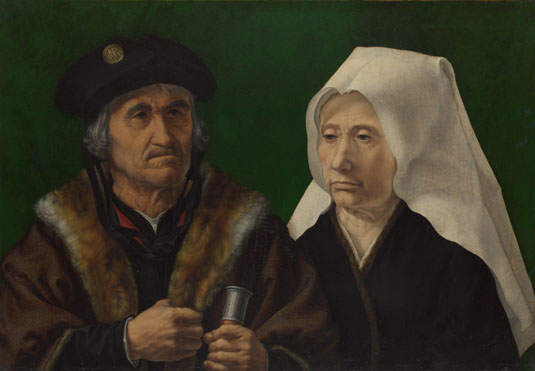
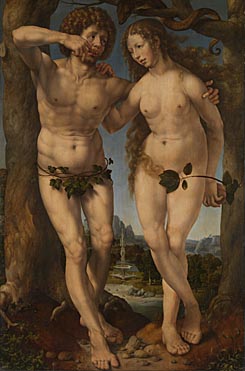
 I was almost impossibly tired when I arrived at the National Gallery. I'd had a good but busy week and was still recovering from the amazing and absorbing experience of hearing Alan Moore, the Magus of Northampton, read aloud from his novel-in-process. [Note to anyone who hasn't come across Alan Moore: he is not only a remarkable writer but also one of the kindest and most courteous authors I have encountered. His reading held everyone in a huge lecture theatre spellbound for nearly an hour and he spent a further hour and a half speaking to everyone who had queued to have their books signed.]The day after Alan Moore, I was on my way to visit my parents, unsure I was sufficiently awake to take in the Gossaert exhibition but knowing that I was unlikely to find another opportunity to see it. I also had my new Art Fund card with me - at last I've fulfilled my resolution to join, not just for the very welcome benefits but also because I have benefited from the Art Fund through a lifetime of gallery visits.The route to the exhibition took me past many familiar paintings. On one side I spotted a favourite Titian. Through the entrance to another room I thought I glimpsed a Vermeer. There was Murillo, staring out of his frame like a competent marketer of his own paintings. In my susceptible state of mind, even Rubens seemed set to lure me from my path toward Gossaert. After all, Rubens was not only free but there were comfortable padded benches from which his work could be admired. (I don't usually admire Rubens that much.)I forced myself to make the long trek to the basement of the Sainsbury wing where the Gossaerts were displayed. It was worth it. I realised that I had seen and admired individual paintings by Gossaert in the past but I'd never seen them in relation to one another before. I hadn't even registered the artist's name.There are six rooms in the exhibition. Gossaert's drawings and paintings are complemented by the work of artists who influenced him - a startling range from Northern European artists like Durer to the classical tradition of the Italian Renaissance. Although he's only mentioned in the timeline at the start of this exhibition, it's easy to see Holbein as the heir of this remarkable combination of influences.There's more to Gossaert than his portraits but these are the most obviously remarkable part of his work. The people he paints in portraits convince as human beings, simultaneously familiar and unknowable. This isn't just true of his secular portraits. There's a lavishly clad Mary Magdalen with sly glance and dirty fingernails. But he also paints relationships, including erotic relationships. There are various works showing Adam and Eve, including some copies of lost originals, but all convey an astonishing blend of tenderness and desire.The work that stunned me most - and nearly moved me to tears - was a painting of Christ in the Garden of Gethsemane. It's a dark painting - even the red robes of the flying angel and the sleeping St John are barely lit. An elderly figure - St Peter, perhaps, lies on his back, asleep in the foreground. He has the pallor of exhaustion. But at the centre is the kneeling figure of a youthful Christ, beardless, confused and close to despair. It's not an attractive figure but terrifyingly recognizable. It's the expression of any child confronting an incomprehensible horror. It could be Libya or Afghanistan - or, too often, the U.K.At the end of the exhibition I couldn't give an account of Gossaert. I had no sense of the man who painted the pictures, except that he could see and reproduce with pencil on paper or paint on canvas. He had, it seems, some human understanding that didn't take a verbal form. And he had the luck to be taken up by a succession of patrons who took him within reach of the influences he needed to develop his art.It was luck. That's the problem with patrons. While Gossaert had the right patrons for his development as an artist, he was limited to painting what they required: a portrait of a marriageable daughter, erotic works for a private collection, an altar piece, a sketch for a tomb. There is no way of knowing what Gossaert would have liked to paint. It's lucky that some of his patrons' requirements suited a style that we can now appreciate.It's luck too that has made me so familiar with the works in the National Gallery - the luck of living near a free art gallery and being encouraged by my parents to look inside. I was brought up to take advantage of free and cheap culture - to see culture as a good that should be shared.It was shocking, therefore, to read, the day after my visit to the National Gallery, of a Labour MP calling for the introduction of admission charges to London's museums. He's not just any Labour MP. The Hon. Tristram Hunt, son of a life peer and a historian with a proclaimed interest in radicalism and the working class, has written an introduction to a recent edition of Robert Tressell's The Ragged-Trousered Philanthropists. In this book, Robert Tressell, through his main socialist characters, argues that culture is one of the necessities of life and should be available to all. I assume Tristram Hunt read the book before writing the introduction. It's a shame he didn't take in its arguments.It's fair to say that Tristram Hunt wants free admission to the museums in his own constituency of Stoke-on-Trent and, by extension, to other regional museums. I think they should be free too. But I don't think the country's great art galleries and museums should become the preserve of the wealthy. And I'm not interested in any party that can consider excluding the poor from culture, which is not just an education but a means to nourish imagination.Had there been a charge for the National Gallery, I might have visited once or twice when I was growing up. I know I wouldn't have gone there often - and I wouldn't have learnt much about the history of art. I remember when Mrs Thatcher introduced admission charges for museums and galleries in the 1980s. I was poor then and on many occasions I was stuck outside, wishing I could afford to go in.Now I've joined the Art Fund. I make donations because museums and galleries were free in my childhood and it's time to say thank-you. If there had been a charge, I wouldn't have bothered. I'd have known museums and galleries weren't for the likes of me.
 I'm in danger of succumbing to a new addiction. In the past few weeks I don't just come downstairs desperate to ignite the gas beneath the espresso-maker. I also tune feverishly to Radio 3.
It began with Buchner. I read his plays years ago and have twice seen excellent productions of Berg's opera Wozzeck. But I've never seen the original plays performed. So when, by chance, I noticed that Danton's Death was being broadcast on Radio 3, I tuned to the station - and didn't tune away.
In the past Radio 4 has been my default station. But the new and views have weighed on me, as has the immense wordiness of it all. I spend so much of my life with words that every so often, I need a break - and the music on Radio 3, at its best, provides that.
But this week started unfortunately. Paul Dukas is composer of the week - and that should have been excellent, because I know so little about him or his work. It was a shame that, early on, the compiler of the programmes felt compelled to play his most famous work, "The Sorcerer's Apprentice." I'd have liked to consider it in relation to the Goethe poem on which it was based but I couldn't. I've seen Fantasia. My mind was flooded with images of Mickey Mouse.
It was a relief, therefore, to find a piece of music which I could experience simply as music - which didn't crowd my mind with words and images but existed in sound and space, on its own terms.
I was at De Montfort University's Cultural eXchanges festival - an annual event that offers a range of cultural events, talks and debates - mostly for free - to locals in Leicester and the wider East Midlands. I've managed to attend a number of sessions but the one that stands out for me is the one that's hardest to describe and explain. Its resistance to description and explanation is one of the things I liked best about it.
Simon Emmerson's Memory Machine is an installation. I didn't know what to expect. What I found was a darkened studio - there were coloured lights and bean-bags. We entered in small groups, advised to walk carefully andlet our eyes adjust. Some people chose to sit or lie on the floor. I remained standing and, from time to time, walked around. My interest was in the sound.
When sound doesn't conform to the normal expectations of music - when it isn't in a definable strict form and doesn't include words - the only thing to do is to experience it and either succumb or not succumb. There were occasional sounds that seemed familiar - the fall of water, for instance - that conjured up ideas and past experiences. But other sounds I seemed to feel physically - in my body as much as through my ears. The sound came from different directions at once - the balance changed as I moved (as quietly as I could) across the studio. I felt at times excited - and at others intensely relaxed.
I couldn't stay as long as I wished. Perhaps that is as well. If I'd stayed too long I might have felt I was floating. As it was I had found, briefly, something I craved - a way of being that was neither speech nor image.
I suppose some people would dismiss such work as "avant-garde" or label it "difficult." I found it neither - but I know little about music. All I know is that sometimes, when I choose to experience a new work and am ready to accept what it has to offer, I discover new and unexpected sources of delight.
Note: The photograph is not associated with Simon Emmerson's composition. It was taken during a performance of Ligeti's Poeme Symphonique for a hundred metronomes at Covent Garden last year.